
U.S. 50% Duty on Certain Canadian Goods now in effect
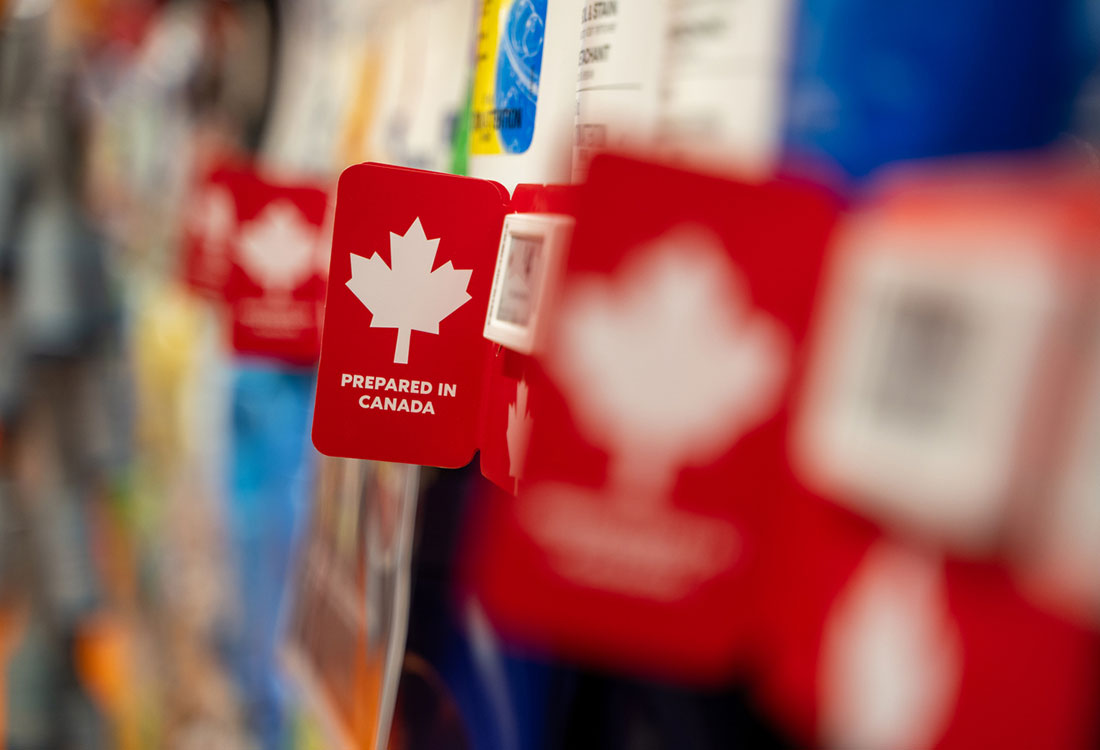
After talks between Canada and the U.S. broke down late Friday, the 50-percent U.S. duty on certain Canadian-origin goods took effect at 12:01 a.m. Eastern Time on August 22nd, 2026.
Important: The 50-percent tariff will apply to the named goods regardless if those goods are qualified under CUSMA/USMCA (previous tariff actions included an exemption for CUSMA/USMCA, but this tariff does not).
The listed goods, subject to the 50-percent tariff, may be found in the following (3) lists complete with tariff descriptions:
- List 1 (product list)
- List 2 (product list)
- List 3 (product list)
Prime Minister Mark Carney said Saturday morning that Canada will issue dollar-for-dollar retaliatory tariffs to take effect September 8, 2026. The list of US-origin goods subject to additional tariffs upon import into Canada has not yet been published.
Resources:
CSMS # 69606660 – GUIDANCE: Section 338 Additional Duties on Certain Goods of Canada
Section 338 Canada HTS LIST Final
Prime Minister Carney delivers remarks on Canada-U.S. trade negotiations
For more information, contact Brian Rowe, Director – Customs Compliance & Regulatory Affairs.
Canada announces up to 50% counter-tariffs on certain US goods
In response to the ongoing trade dispute, the Government of Canada has placed new counter-tariffs (surtaxes) on a wide range of goods imported from the United States.
The value of US-origin goods being tariffed ($27.6 billion) is roughly equal to the value of Canadian goods that fall under the 50-percent tariffs imposed by the U.S. on Canada this past weekend. Canada’s counter-tariffs match the US Section 338 tariffs – dollar for dollar, although not stated in the notice, appear to apply regardless of CUSMA/USMCA applicability similar to the US Section 338 tariff.
The list of US products subject to counter-tariffs, upon import to Canada, include fish, cheese, pulp and paper, household appliances, electronics, textiles, tools, machinery, steel and aluminum, etc..
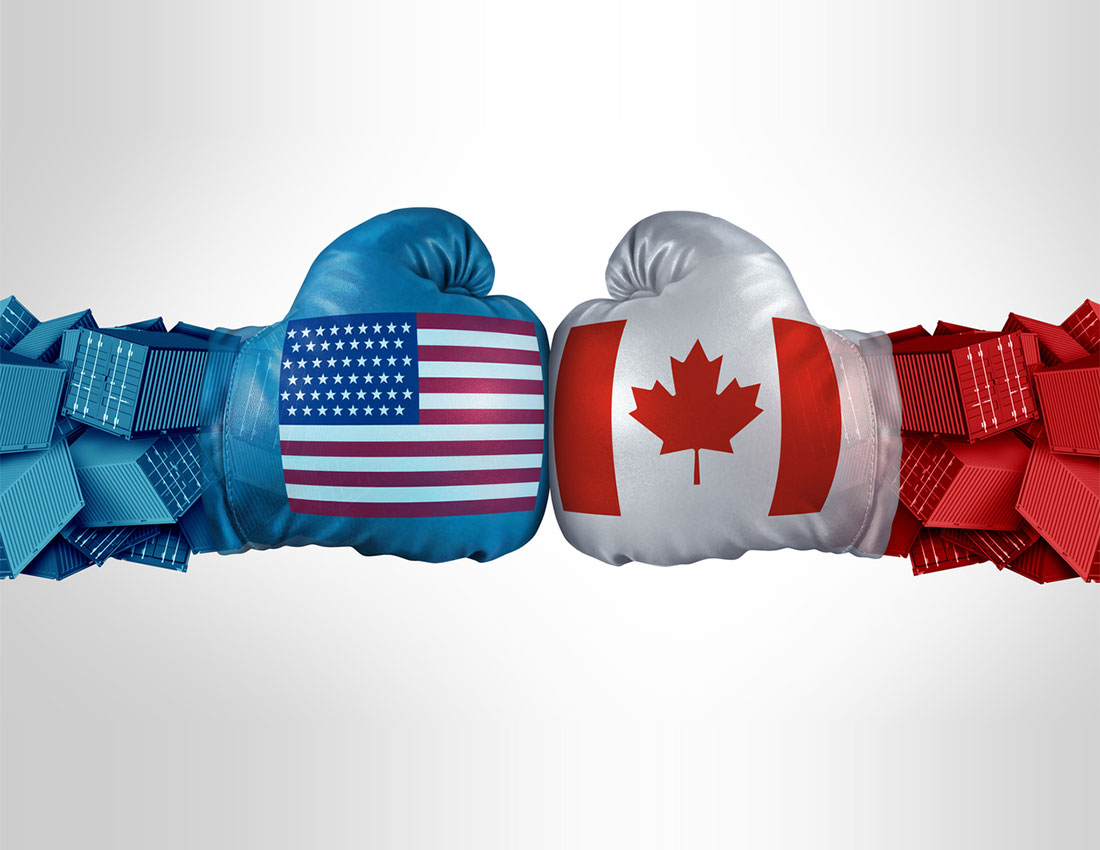
In certain sectors, such as steel and aluminum, existing counter-tariffs will increase from 25-percent to 50-percent to match US rates. Other existing counter-tariffs, including against US autos, will also continue to apply.
A full list of U.S. products subject to counter tariffs may be found here.
The counter-tariff rate will be either 15, 25, or 50 percent tariffs as outlined in the listing. These countermeasures will come into effect 12:01 a.m. Eastern Time on September 8, 2026.
These additional tariffs only apply to goods originating from the U.S., which shall be considered as those goods eligible to be marked as a good of the U.S. in accordance with the Determination of Country of Origin for the Purpose of Marking Goods (CUSMA Countries) Regulations.
Canada’s countermeasures do not apply to US goods that are in transit to Canada on the day which they come into force. Additional details on the administration of these tariffs will be available on the Canada Border Services Agency website: Customs Notices (cbsa-asfc.gc.ca).
If you are unsure whether your products fall these countermeasure tariffs, our Customs Consulting Services regulatory team can help you work through the classifications. Reach out to Brian Rowe, Director, Customs Compliance & Regulatory Affairs, or your Universal Logistics representative.
Hassle-Free Canadian Customs Clearance
Clearing goods into Canada has never carried more risk. Surtaxes, shifting tariff measures, and CBSA verification priorities mean a single misclassification can cost you thousands.
Universal Logistics keeps your shipments moving and your accounting clean, with fully licensed personnel at key clearance locations, PARS pre-arrival release to avoid border delays and UConnect for real-time release status and document management. From tariff classification and CUSMA origin eligibility to Commercial Accounting Declaration (CAD) corrections, duty relief and refund claims, you get personalized support from a team that has seen it all in over 75 years.
Visit our Canadian Customs Brokerage page to learn more, or contact us for more information.
Six Months On: What a Closed Strait of Hormuz Means for Canadian Shippers
Why one narrow passage moves the whole market
The Strait of Hormuz, the passage connecting the Persian Gulf to the Gulf of Oman, has long been recognized as the single most consequential maritime chokepoint in the global economy. Its disruption is now approaching the six-month mark, and the effects have travelled far beyond the region.
Under normal conditions, roughly 120 to 140 commercial vessels transit the strait on a typical day, with oil tankers making up the largest share, followed by container ships and bulk carriers. In the first half of 2025, total oil flows through Hormuz averaged approximately 20.9 million barrels per day, close to one-fifth of global petroleum liquids supply.
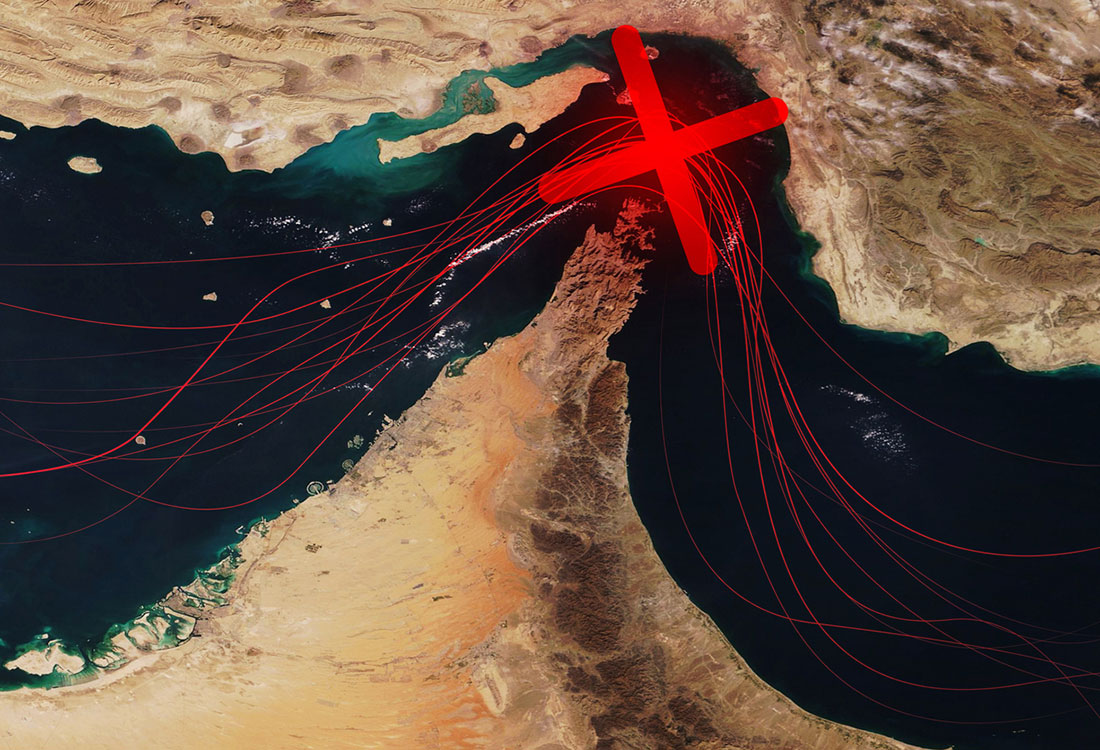
There is no practical substitute. Regional pipeline capacity can absorb only a fraction of that volume, and for Qatari and Emirati LNG there is no alternative route at all.
Ocean freight: surcharges, longer routings, absorbed capacity
The ocean freight market response was swift and measurable. Carriers implemented emergency fuel and war risk surcharges and, in several cases, introduced entirely new charge categories to recover the cost of operating in and around a designated war risk area. War risk insurance premiums climbed sharply, and some underwriters withdrew coverage for affected transits altogether, making commercial passage uneconomic regardless of a carrier’s willingness to sail.
At the same time, rerouting around the Cape of Good Hope added substantial transit time and absorbed a significant share of global fleet capacity. This second effect is the one shippers most often underestimate. A longer voyage does not simply delay a single shipment; it removes vessel capacity from the market for the duration of the additional sailing days. The result has been upward rate pressure on Asia-to-Europe and Asia-to-North America lanes, even during periods of soft underlying demand, along with clustering and congestion at transshipment hubs that were never built for the redirected traffic pattern.
Airfreight: a cost shock and a demand shift
The indirect effects on airfreight are structurally significant for two reasons: fuel costs and modal-shift demand.
Jet fuel accounts for roughly 20 to 25 percent of airline operating costs under normal conditions, so the surge in fuel prices at the peak of the disruption represented a considerable cost shock for carriers. The Gulf is not only a crude oil source, but also a major refining and jet fuel export region, which compounded the impact on markets dependent on those product flows.
On the demand side, ocean freight disruptions have historically led to a measurable shift toward air cargo for time-sensitive shipments. Shippers facing delays or rerouting on ocean lanes will in some cases absorb the higher unit cost of air freight to preserve production schedules and contractual delivery obligations. Where that shift meets constrained capacity and elevated fuel surcharges, the cost differential widens quickly.
What this means for your supply chain
The Hormuz disruption illustrates with unusual clarity how exposed modern supply chains remain to single-point geographic chokepoints. For Canadian importers and exporters, three practical implications stand out:
- Build the extra transit time into planning. Cape routings are not a temporary detour at this stage. Safety stock and reorder points should reflect the longer lead time rather than the pre-crisis schedule.
- Read your surcharge exposure carefully. War risk and emergency conflict surcharges are added to base rates and can change with limited notice. Understand which of your lanes and bookings are in scope.
- Confirm your cargo insurance actually responds. Standard marine policies routinely exclude war, terrorism, and political violence. Coverage assumptions made in a calm market may no longer hold.
Looking ahead
Volatility is likely to persist until a durable ceasefire is reached, a longer-term agreement is in place, and shipping conditions stabilize. In the meantime, businesses will need to monitor geopolitical developments closely and adapt their sourcing, logistics, and risk management strategies accordingly.
If you would like to review how your ocean and air routings are exposed to Gulf conditions, our freight team is happy to walk through the alternatives with you. A SMART Freight Review is a straightforward place to start. Contact David Lychek, Director – Ocean and Air Services.
Canada Imposes 25% Provisional Safeguard Surtax on Wood Cabinets and Vanities
Effective July 31, 2026, certain wood cabinets, vanities, and their subassemblies imported into Canada are subject to a 25% provisional safeguard surtax under the Certain Wood Cabinet and Vanity Goods Surtax Order.
The Canada Border Services Agency (CBSA) published implementation details in Customs Notice 26-17 and updated the notice on August 5, 2026.
The surtax applies for up to 200 days from July 31, 2026, which runs to, on, or about February 15, 2027. It is calculated based on the value of the goods and applies on top of customs duties, anti-dumping and countervailing duties, and taxes.

What Is Covered
Goods classified under tariff classification numbers 9403.40.00.10, 9403.60.10.31, 9403.60.10.39, and 9403.91.00.90, specifically:
- Cabinets and vanities made in whole, or in part, of wood products and intended for permanent installation
- Subassemblies of those cabinets and vanities, including frames, boxes, doors, drawers, drawer components, back panels and end panels, and desks, shelves, and tables attached to or incorporated in them
Coverage applies regardless of whether the goods are solid or engineered wood, veneered or laminated, finished or unfinished, complete or incomplete, assembled or shipped flat-pack, combined with non-wood components such as metal, marble, glass, or resin, imported attached to sinks, faucets, or countertops, or marketed as permanent, semi-permanent, or modular.
What Is Excluded
- Goods originating in Canada, the United States, Mexico, Chile, Israel, or another CIFTA beneficiary
- Goods originating in a developing country or territory listed in Schedule 2 to the Order. This is a closed list. China, Vietnam, Malaysia, Indonesia, Thailand, and India are not on it, so the largest offshore cabinet sources remain fully subject
- Goods in transit to Canada on July 31, 2026, provided the importer holds proof such as a bill of lading, report of entry, or cargo control document
- Casual goods, and goods imported for non-commercial purposes
- Goods classified under Chapter 98 of the Customs Tariff
- Freestanding furniture, including office furniture and retail display fixtures, not designed for permanent installation
- When imported separately from a cabinet or vanity: aftermarket organizational inserts and dividers, solid wood decorative accessories such as corbels and rosettes, and non-wood hardware including hinges, brackets, catches, locks, drawer slides, fasteners, handles, and knobs
- Wall-mounted medicine cabinets with at least one mirror, assembled and packaged for retail sale at time of import, with a maximum depth of 17.78 cm (7 inches)
How to Report It
This is where the August 5 update matters most. Importers must declare covered goods as subject to a safeguard on the Commercial Accounting Declaration through the CARM Client Portal, EDI, or API, using safeguard code 26169A.
Critically, the amount owing is entered in field 87 “Safeguard”, not field 85 “Surtax” where standard surtaxes are reported. Importers using the self-declare option in CARM must calculate the amount themselves. Goods qualifying for an exception must be affirmatively declared as non-subject at the time of accounting.
On a $10,000 shipment with a 0% Most-Favoured Nation (MFN) rate, the surtax is $2,500, and GST is then calculated on $12,500 rather than $10,000. The surtax increases the tax base and the duty burden.
Relief Options
Canada’s Duties Relief and Duty Drawback programs are available for surtax paid or owed. For goods of US or Mexican origin, the CUSMA “lesser of two duties” limitation does not apply, so full relief may be available where CUSMA criteria are met.
What Happens Next
The measure is provisional. The Canada Institute of Traffic and Transportation (CITT) is conducting a safeguard inquiry GC-2026-001 into whether final safeguard measures are warranted, with public hearings held in October 2026 and a report due to the Minister of Finance by January 15, 2027. If the Tribunal finds no injury, the surtax ceases as of the date of that finding. If it finds injury, the surtax will continue to apply only to the goods the Tribunal identifies, and final remedies could include a longer-term surtax, quotas, or tariff rate quotas.
Importer Action Checklist
- Review classification on all cabinet, vanity, and subassembly imports against the four listed tariff classification numbers
- Confirm origin under the marking regulations, not by preferential tariff claim
- Verify whether any sourcing country appears on the Schedule 2 developing country list
- Assemble in-transit proof now for any shipment that departed before July 31st and has not yet been accounted for
- Confirm your broker or internal team is populating field 87 with code 26169A, not field 85
- Review any separately imported hardware, accessory, or medicine cabinet lines that may qualify for exclusion
- Assess Duties Relief or Drawback eligibility if goods are being re-exported
- Reprice landed cost, including the GST uplift, and review contracts and Incoterms with suppliers
- Consider an advance ruling where classification or origin is uncertain
For more information, contact Brian Rowe, Director – Customs Compliance & Regulatory Affairs.
Global Spotlight Quiz

Name the City Known for Its Port and Iconic Gothic Architecture
- The city’s name translates to “the harbour” or “the port,” highlighting its status as a maritime hub.
- It boasts the largest container port in the country, making it a central gateway for international trade.
- A favoured destination for cruise ships, offering visitors a glimpse into its vibrant culture and history.
- The city center, a UNESCO World Heritage site, showcases Auguste Perret’s groundbreaking architectural designs.
- The city’s scenery has been immortalized in several works by the renowned artist Claude Monet, including the famous “Impression, Sunrise.”
Answer: Le Havre, France

For more information about shipping freight to or from this city, contact Monserrat Vazquez, Manager – Freight Solutions.
Quick Tip
Ensure basic information is completed on all commercial invoices
The commercial invoice is the basis for the Canadian customs entry and determines any applicable duties and taxes. Ensuring that the correct information is included is vital to the accurate processing of your shipment. The following information should always be shown:
- Buyer & Seller
- Full description of goods
- S. classification
- Country of Origin
- Marks & numbers
- Net & gross weights
- Unit and extended price with currency
- Cost of freight, insurance & packing
- Terms of Delivery (Incoterms 2010)
- Terms of payment
- Date of Direct Shipment
- Reference numbers (P.O., Import or Export Permit number, Letter of Credit number, etc.)
If any of the above information is not supplied, delays or even seizures may occur at Customs and extra charges may result.

At Your Service
Isabelle Lima
Team Leader – Border Clearances, Canadian Customs Operations
Isabelle Lima joined Universal Logistics in April 2024 as a member of the Canadian Customs Operations team at our Head Office, facilitating the customs clearance of courier and rail shipments from the U.S. to Canada.
Isabelle has been involved with the training and development of new employees, ensuring that new team members have a thorough understanding of our procedures. She has also excelled in quality control, demonstrating strong attention to detail and a commitment to ensuring the accuracy of our Canadian customs entries.
In June, Isabelle was promoted to Team Leader – Border Clearances. In this role, Isabelle will continue to support the Border Clearances team, focusing on maintaining our internal quality control processes.
Isabelle can be reached by phone (905) 882-4880 ext. 1251 or by email.

Team Leader – Border Clearances
(Canadian Customs Operations)
SMART Logistics
Controlling how freight moves through your supply chain could save you thousands – or more.
Working with us means someone always asks: how can we make this shipment better?
Single-sourced trucking, customs clearance and distribution to expedite your freight shipments between the U.S. and Canada.
Route is produced monthly for the clients of Universal Logistics. Reader comment and story ideas are welcome. Comments of general interest to all Route readers will, with the permission of the writer, be published. Copyright © 2026 Universal Logistics Inc. All rights reserved. Reproduction for any commercial use is strictly prohibited.
Route is produced by Universal Logistics. Editor: Bettina Scharnberg. Email: bscharnberg@universallogistics.ca While every effort has been made to ensure the accuracy of information contained herein, Universal Logistics accepts no responsibility or liability for errors or omissions. Written correspondence should be forwarded to:
Universal Logistics Inc.
125 Commerce Valley Drive West
Suite 750, Thornhill, Ontario L3T 7W4
Tel: 905-882-4880 Fax: 905-882-2250
Attention: Bettina Scharnberg