
U.S. to impose 50% Section 338 Duty on Certain Canadian Goods
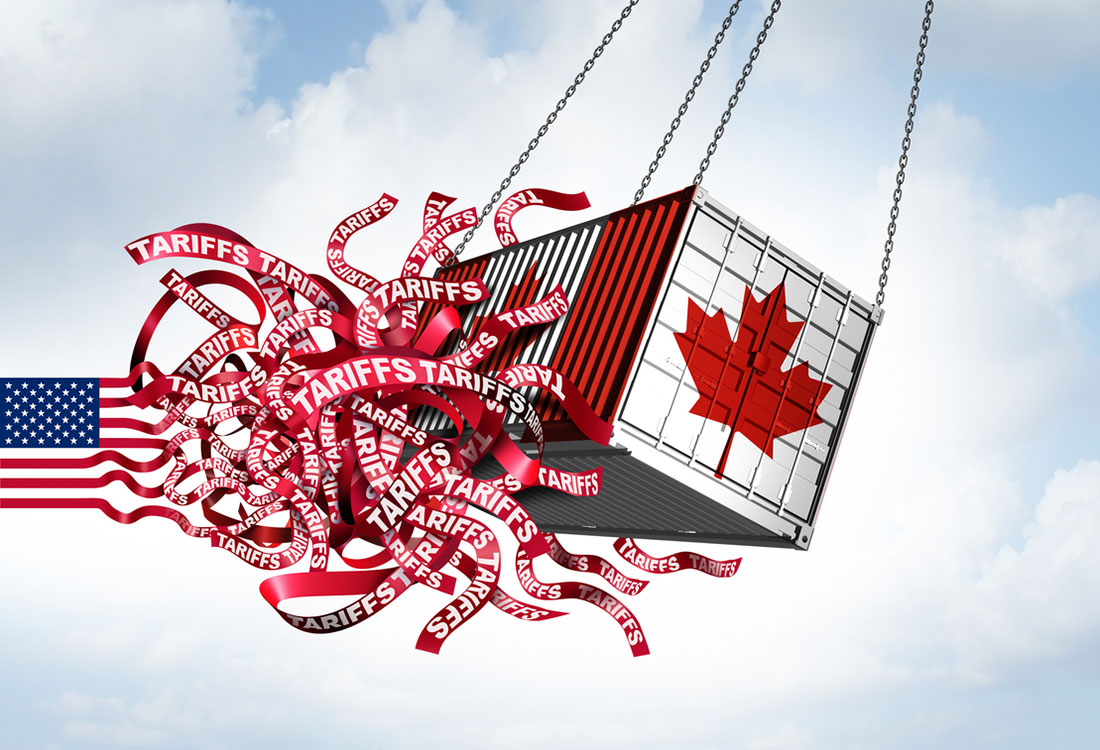
On July 20, 2026, US President Donald Trump signed three proclamations under Section 338 of the Tariff Act of 1930, imposing an additional 50 percent ad valorem duty on certain Canadian-origin goods entering the United States. The duties take effect at 12:01 a.m. Eastern Time on August 19, 2026.
Section 338 allows the President to impose additional duties of up to 50 percent to offset discrimination against US commerce by a foreign country. It has effectively never been used to impose duties before now, and it carries no investigation or consultation requirement, which is why the action moves from signature to effective date in the statutory minimum of 30 days.
The three proclamations
Each proclamation targets a different Canadian trade practice and carries its own product list:
Do not stop at the proclamation titles
This is the point most importers will miss. The product lists extend well beyond dairy, alcohol, and vehicles. Coverage includes wine, cement, plywood, furniture, fishing rods, seeds, clothing, wigs, swimming pools, and hockey equipment, etc.. The motor vehicle annex alone spans most sections of the Harmonized Tariff Schedule.
If your compliance review stopped at the three named sectors, you have not finished the review.
CUSMA/USMCA does not shield covered goods
The White House Fact Sheet confirms the Section 338 duties apply to all covered goods, made in Canada, regardless of whether the good originates under CUSMA/USMCA. This breaks the pattern importers have relied on for the past 18 months, where a valid origin certification generally provided relief under IEEPA and Section 122 measures. A CUSMA/USMCA certificate of origin will not exempt a listed product here.
The 50 percent duty is additional, applying on top of existing duties, taxes, fees, and charges.
What is excluded
Energy, potash, goods already subject to Section 232 duties, and certain other goods including fish, critical minerals or articles, excluding unmanned aircraft, subject to the World Trade Organization Agreement on Trade in Civil Aircraft.
Timing details that matter
- The duty attaches to goods entered for consumption, or withdrawn from warehouse for consumption, on or after 12:01 a.m. ET August 19, 2026. Customs release date governs, not purchase order date or shipping date.
- As published, the proclamations contain no in-transit exception. A shipment that arrives in the U.S. August 18th, but is customs released August 19th pays the duty.
- Warehousing ahead of the date does not preserve current rates, since withdrawal for consumption triggers the duty.
- Covered merchandise admitted to a U.S. foreign trade zone on or after August 19th must be admitted under privileged foreign status, locking in duty treatment at admission. FTZ entry will not avoid the duty.
Canada’s position
Prime Minister Mark Carney has described the action as another unilateral measure in direct violation of CUSMA/USMCA and has stopped short of announcing counter-tariffs, stating Canada is prepared to intensify negotiations. Retaliatory measures on US-origin goods entering Canada remain a live possibility.
What importers should do now
Review the HS classifications for all Canadian-origin goods you ship into the U.S., not just those in the descriptions of the three named sectors, and check them line by line against each Annex to determine which goods will become subject to the 50% duty.
Legal challenges at the US Court of International Trade are widely expected, but Section 338 is an express tariff delegation and importers should not plan around judicial relief arriving before the effective date.
If you are unsure whether your products fall under any of the three Annexes, our US Customs Consulting Services regulatory team can help you work through the classifications. Reach out to Brian Rowe, Director, Customs Compliance & Regulatory Affairs, or your Universal Logistics representative.
U.S. Executive Order - Strengthening Customs Enforcement
On June 3, 2026, US President Donald Trump issued Executive Order titled “Strengthening Customs Enforcement” directing the Department of Homeland Security (DHS) and U.S. Customs and Border Protection (CBP) to undertake a broad overhaul of the rules governing importation into the United States.
The Order lays the groundwork to reform U.S. customs enforcement including scrutiny of importers, particularly smaller businesses and non-resident importers, implementing disclosure obligations and revising penalties for non-compliance. The White House Fact Sheet outlines the customs reform.
The Order requires a raise in bonding requirements for Importers of Record (IORs) and require them to show they aren’t shell companies by disclosing domestic assets. The order also places increased scrutiny on foreign IORs, including not allowing them to make informal customs entries, which are typically used for low-value shipments.
Enhanced requirements for Foreign Importers
- maintain a bond or a minimum level of tangible domestic assets, or both
- provide to CBP, ownership and beneficial ownership disclosures, business affiliation disclosures, and domestic asset disclosures, and any other data that CBP deems necessary
- prohibits foreign Importers of Record (IOR) from filing informal entries, meaning that only U.S. IORs will be authorized to file informal entries
- these importations, valued at less than $2,500 USD, are subject to a Merchandise Processing Fee (MPF) of $2.69 per shipment, payable to CBP. Removing the informal entry process will increase the minimum MPF to $33.58 per shipment
- Imports of USMCA/CUSMA qualifying goods are exempt payment of MPF
- require foreign IORs be validated by Customs Trade Partnership Against Terrorism (CTPAT), if eligible, or otherwise use a CTPAT validated and licensed customs broker to file entries
- Clients of Universal Logistics USA can rest assured knowing we are C-TPAT validated to file entries on your behalf
- these importations, valued at less than $2,500 USD, are subject to a Merchandise Processing Fee (MPF) of $2.69 per shipment, payable to CBP. Removing the informal entry process will increase the minimum MPF to $33.58 per shipment
Note – a foreign IOR, in the case of an entity, is one that is not organized under the laws of the United States, not located in the United States, does not have at all times controlling beneficial owner(s) who are United States citizens or lawful permanent residents, or does not own a significant amount of real property in the United States, as determined by the Secretary.
Enhanced requirements for Importers of Record
- require that an IOR maintain at all times a minimum level of tangible domestic assets, bonding, or both, as determined by CBP to be necessary to ensure compliance with U.S. customs and trade laws, and increasing the minimum required bond coverage for an IOR
- requiring that an IOR be designated and reported to CBP, and that a bond, or sufficient tangible domestic assets, or both, be required, for all formal entries
- requiring that an IOR provide to CBP additional data and identification information, including anticipated import volumes, year organized, ownership and beneficial ownership disclosures, business affiliation disclosures, and domestic asset disclosures, and any other data that CBP deems necessary
Increased Enforcement and Penalties
CBP is directed to expand enforcement activities, including:
- Increased audits and investigations
- More aggressive bond enforcement and liquidated damages claims and penalties
- Restrictions on in-bond shipments
Implementation Timeline for CBP
- Within 45 days, CBP must submit legislative recommendations to the president on strengthening customs enforcement;
- Within 90 days, CBP must begin implementing enhanced disclosure requirements, revise enforcement penalty provisions, and require foreign exporters to submit all outstanding documentation;
- Within 180 days, CBP must revise importer eligibility standards, establish enhanced vetting procedures, implement the “good standing” framework, apply foreign IOR restrictions and bonding changes, and update the IOR registry consistent with this order; and
- In one year, CBP must submit an implementation report to the president.
For Canadian, and other foreign exporters, acting as non-resident importers, now is an appropriate time to review customs compliance procedures and identify potential areas of risk before they become the subject of an audit or enforcement action.
For more information, contact Brian Rowe, Director – Customs Compliance & Regulatory Affairs.
Ocean Exports: Moving Your Cargo Worldwide
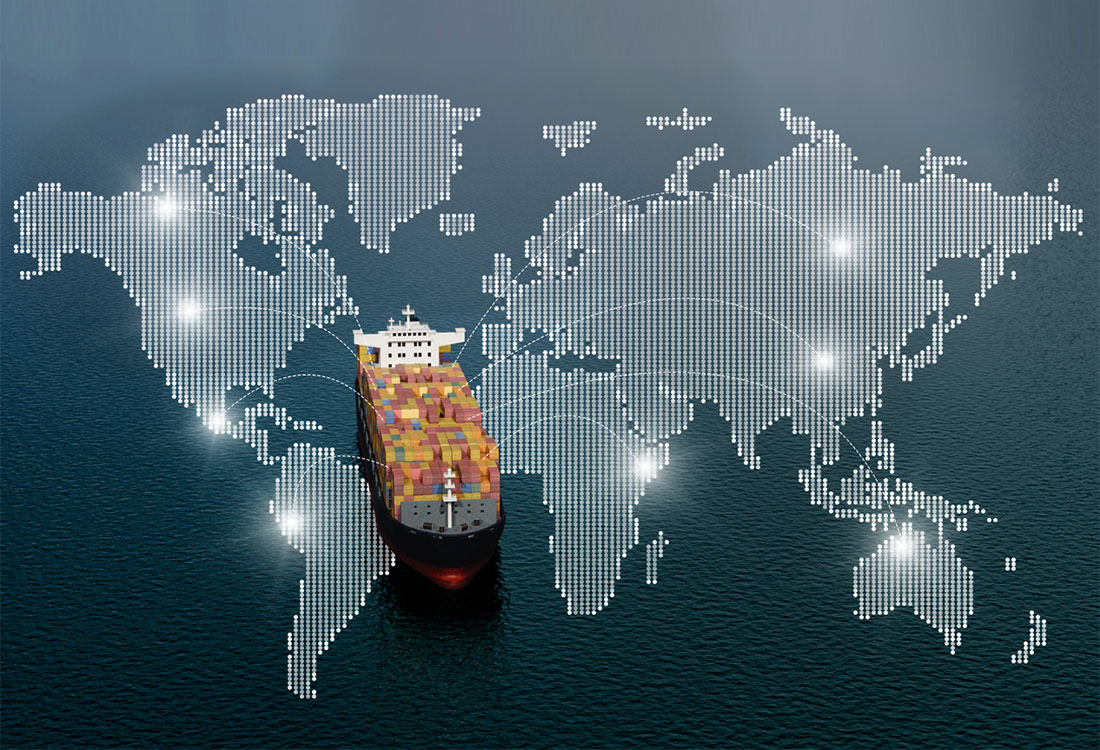
When it comes to ocean exports from both Canada and the U.S., Universal Logistics brings decades of hands-on experience for all cargo types and destinations.
Every cargo type is handled with care
Our team manages all types of ocean exports, including LCL and FCL, break bulk, dangerous goods, and project cargo. Whatever the size, sensitivity, or complexity of your shipment, we have the expertise to move it safely and efficiently.
Export reporting done right
Export regulatory compliance is where many shipments encounter issues that can result in delays or potential penalties. We are well-versed in all aspects of export reporting requirements, including the Canadian Export Reporting System (CERS) in Canada, and the Automated Export System (AES) in the U.S., ensuring adherence to export regulations.
Global reach through trusted partners
Working alongside our network of overseas agents, we are fully aware of import requirements for destinations worldwide. At the same time, our global network of ocean carriers gives you access to markets around the world at competitive rates.
Economical, efficient, and fully visible
Utilizing our freight services ensures your cargo moves in the most economical and efficient way possible while offering a variety of routing options to meet your specific needs, and providing complete visibility for every move.
Ready to ship? Contact David Lychek, Director – Ocean & Air Services, to plan your next ocean export with Universal Logistics.
CBSA Trade Compliance Verification and Priorities: July 2026
The Canada Border Services Agency (CBSA) has released its July 2026 list of verification priorities. Importers should review the updated focus areas to confirm their goods are correctly classified, valued, and declared.
Compliance priorities
CBSA has identified the following areas for review:
- Tariff rate quota and classification of supply managed goods, including frozen desserts containing 5% dairy products and spent fowl products
- GST and excise duties and taxes, covering GST exemption codes, vaping products, and precious metals
- CUSMA origin verifications in the automotive industry
- Import origin verifications under CETA, CUKTCA, and the CPTPP short supply list
- Duties Relief Program (DRP) verifications of licensees importing supply managed goods
- China Surtax Order (2024) for electric vehicles, steel, and aluminum
- United States Surtax Orders, including Order 2025-01, steel and aluminum (2025), and motor vehicles (2025)
- Additional surtax measures on certain steel goods, steel and aluminum goods, and steel derivative goods
- Energy commodities and final accounting, including electricity imports under Chapter 27 of the Customs Tariff
Tariff classification priorities
The current tariff classification verification and compliance priorities are:
- China Surtax Order (2024): electric vehicles
- China Surtax Order (2024): steel and aluminum
- United States Surtax Order (2025-1)
- United States Surtax Order (Steel and Aluminum 2025)
- Steel Derivative Goods Surtax Order
- Energy commodities (valuation)
Carried over from previous lists
Several items remain active from earlier rounds:
- Gloves (Round 3): headings 39.26 and 42.03
- Bags (Round 3): heading 42.02
- LED Lamps (Round 2): heading 85.39
- Spent Fowl: headings 02.07, 16.01, and 16.02
- Frozen desserts: tariff item 2105.00.10
CBSA also maintains a historical verification priorities list, which all importers should review, as the agency frequently circles back to prior priorities to confirm ongoing compliance. Because CBSA sets its priorities through a continuous, risk-based process, new items may be added and existing ones revised at any point during the year.
If your goods fall under any of these priorities, our customs compliance team can review your classifications, valuations, and origin declarations before CBSA does.
For more information, contact Ivy Woo, Manager – Customs Consulting Services.
Global Spotlight Quiz

Name the city known for its red sandstone walls and buildings
- Known as the “Red City” due to its distinctive red sandstone walls and buildings.
- Home to 9 UNESCO World Heritage Sites.
- Located at the foot of the Atlas Mountains, it has served as a major trading center for nearly 1,000 years.
- Has served as a setting for big-budget Hollywood productions like The Man Who Knew Too Much (1956) and Mission: Impossible – Rogue Nation (2015).
- Home to the stunning Majorelle Garden, once owned by fashion designer Yves Saint Laurent.
Answer: Marrakesh, Morocco

For more information about shipping freight to or from this city, contact Monserrat Vazquez, Manager – Freight Solutions.
Quick Tip
Modify Your Shipping Habits to Expedite Your Transit Times
Can’t wait until you have enough freight to load a full container? Take advantage of consolidated services to lessen the cost, while maintaining a weekly shipping schedule.
Have a hot rush truck shipment that can’t be late? Hire an exclusive load, regardless of the actual shipment size, and have a truck make a freight delivery that is exclusively for you.

At Your Service
Lukas Hamann, Manager – Customs Operations
Lukas Hamann joined the Universal Logistics Canadian Customs Operations team in 2016 and has progressed through several leadership roles, including Team Leader – Border Clearances and Manager – Border Clearances. Throughout his time with Universal, Lukas has been a key contributor to the success of our Canadian Customs Operations team, recognized for his technical expertise, leadership, and commitment to supporting both employees and clients.
In June, Lukas was promoted to Manager – Customs Operations, where he will continue to oversee our Border Clearances team while providing leadership, technical expertise and operational support across our Canadian Customs Operations team, helping drive continued growth, collaboration and service excellence throughout the team.

Customs Operations
Daniela Barron, Manager – Ocean & Air Clearances
Daniela Barron joined the Universal Logistics Canadian Customs Operations team in 2013 and transitioned to our Ocean & Air Clearances team in 2014. Since her promotion to Team Leader – Ocean & Air Clearances in 2021, Daniela has played a key role in supporting the team’s growth and development and ensuring the efficient handling of ocean and air shipments.Her strong industry knowledge, and commitment to both clients and colleagues have made her a valued member of our Canadian Customs Operations team.
In June Daniela was promoted to Manager – Ocean & Air Clearances. In this role, Daniela will continue to lead our Ocean & Air Clearances team, with a continued focused on client service, process improvements, team development and operational efficiency.
For more information on our Canadian Customs Brokerage service, contact Lukas Hamann or Daniela Barron.

Ocean & Air Clearances
SMART Logistics
Controlling how freight moves through your supply chain could save you thousands – or more.
Working with us means someone always asks: how can we make this shipment better?
Single-sourced trucking, customs clearance and distribution to expedite your freight shipments between the U.S. and Canada.
Route is produced monthly for the clients of Universal Logistics. Reader comment and story ideas are welcome. Comments of general interest to all Route readers will, with the permission of the writer, be published. Copyright © 2026 Universal Logistics Inc. All rights reserved. Reproduction for any commercial use is strictly prohibited.
Route is produced by Universal Logistics. Editor: Bettina Scharnberg. Email: bscharnberg@universallogistics.ca While every effort has been made to ensure the accuracy of information contained herein, Universal Logistics accepts no responsibility or liability for errors or omissions. Written correspondence should be forwarded to:
Universal Logistics Inc.
125 Commerce Valley Drive West
Suite 750, Thornhill, Ontario L3T 7W4
Tel: 905-882-4880 Fax: 905-882-2250
Attention: Bettina Scharnberg