
U.S. Section 232 Tariffs - Update on imports of Steel, Aluminum & Copper
On June 1, 2026, the White House issued a Presidential Proclamation, further adjusting the Section 232 tariffs on aluminum, steel, and copper. The changes took effect for goods entered for consumption on or after June 8, 2026, and run through December 31, 2027.
They build on the April 2026 framework that already shifted duties onto the full customs value of covered goods, not just the metal content.
Section 232 tariffs range from 0% to 50% based on a combination of HS Tariff Classification, Country of Origin and Country of Melt/Pour or Cast/Smelt.

The New Rate Structure
Annex | Scope | Rate |
Articles made entirely/almost entirely of steel, aluminum, or copper | 50% on full value | |
Derivatives substantially made of these metals | 25% on full value | |
Mobile industrial equipment (forklifts, dozers, loaders, non-ag tractors, mobile cranes & drilling derricks, and parts) | Full-value tariff through Dec 31, 2027 | |
Hundreds of low-metal items removed (cosmetics, paints, lubricants, sporting goods, etc.) | No Section 232 duty | |
Metal-intensive industrial & grid equipment | Reduced to 15% through Dec 31, 2027 | |
The HTSUS modifications implementing all of the above | Effective June 8 |
Note: If a product is subject to multiple rates of duty under the above provisions, the lowest applicable rate of duty shall apply.
In addition:
- Products of Argentina, Ecuador, El Salvador, Guatemala, Japan, the Republic of Korea, Liechtenstein, Switzerland, Taiwan, the United Kingdom, or a member nation of the European Union:
- the rate of duty shall be determined by the product’s current ad valorem (or ad valorem equivalent) rate of duty under Column 1 of the HTSUS (Column 1 Duty Rate). For products of these jurisdictions with a Column 1 Duty Rate that is less than 15 percent, the sum of the Column 1 Duty Rate and the additional section 232 ad valorem rate of duty pursuant to this clause, shall be 15 percent. For products of these jurisdictions with a Column 1 Duty Rate that is at least 15 percent, the additional section 232 ad valorem rate of duty imposed pursuant to this clause shall be zero percent;
- US-based materials: subject to 10 percent, determined based on the product’s current ad valorem (or ad valorem equivalent) Column 1 Duty Rate in the same manner outlined above, for derivative articles the aluminum content of which is composed entirely of aluminum that was smelted and cast in the United States, or the steel content of which is composed entirely of steel that was melted and poured in the United States;
- For products of Canada and Mexico that qualify for preferential tariff treatment under the United States-Mexico-Canada Agreement (USMCA), a duty of 25 percent shall apply only to the non-U.S. content of the product. For purposes of this clause, “non-U.S. content” means the total value of the product minus the value attributable to parts produced in the United States. Notwithstanding the foregoing, the total effective duty on the imported product assessed under this subclause shall not be less than 15 percent ad valorem.
- Reduced rates for agricultural, industrial and mobile equipment
- Canada and Mexico USMCA eligible – 25% applies to non-US content; US content (up to 40% of value) is payable at 0%
- Now subject to Section 232 tariffs: Aluminum lithographic plates and steel racks.
- US Content: The threshold for a product to be considered made “entirely” from U.S. aluminum, steel or copper has been reduced from 95% to 85% by weight of the aluminum, steel and copper content in the product (required to determine if a reduced duty is applicable).
For more information, contact Brian Rowe, Director – Customs Compliance & Regulatory Affairs.
Your Trusted Partner for Cross-Border Truck Freight
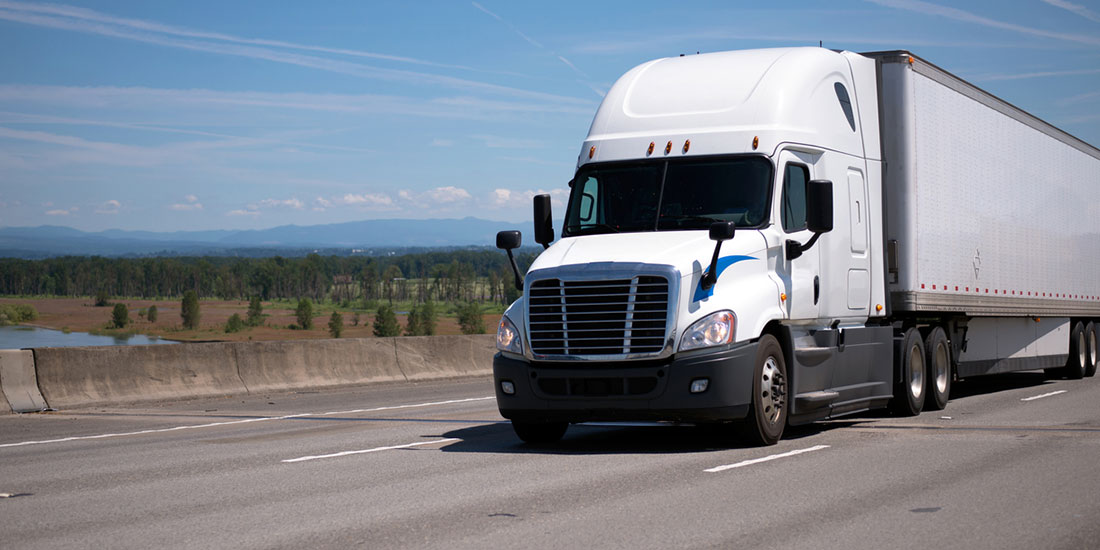
Are you seeking a reliable solution to streamline your cross-border shipping? Universal Logistics delivers customized truck freight services that simplify transportation between Canada and the U.S.. From full-truckload (FTL) to less-than-truckload (LTL), our experienced team handles every detail, including customs clearance, to ensure your cargo arrives safely and on schedule.
With strong expertise across high-volume lanes, New Jersey to the GTA, Pennsylvania and Tennessee into Ontario, and the GTA to Western New York, we consistently source dependable capacity at competitive rates.
And because our Truck Services team works hand in hand with our Customs Operations, Ocean, and Airfreight teams, your domestic and international moves stay coordinated under one roof.
Whether you’re shipping daily or occasionally, we offer flexible options backed by over 75 years of logistics expertise. Our seamless coordination and personalized service mean fewer delays, better cost control, and peace of mind for your business.
Ready to optimize your cross-border shipping? Contact us for a tailored quote today.
Universal Attends 2026 CTN Conference in Bangkok, Thailand
Honoured as Top Contributor

The 2026 Certified Transportation Network (CTN) conference took us to Bangkok, Thailand. Representing Universal at the event were Mark Glionna, Vice President – Client Relations & Business Development and Paul Glionna, Vice President – Systems Development & Operations.
A highlight of the event was Universal being recognized as CTN’s Top Contributor, a testament to the company’s ongoing commitment to partnership, innovation and service excellence. “Thanks to the strong relationships we’ve built through CTN, we’re able to react swiftly to disruptions in the market,” added Paul Glionna. “That flexibility helps us keep our clients’ freight moving, even in uncertain times.”
Throughout the conference, we interacted with over 40 international logistics partners. With global supply chains continuing to feel the ripple effects of US tariff policies, the event provided a timely opportunity to share insights and explore new solutions. “With many clients exploring alternative markets, these meetings give us a valuable perspective on global trends and help us offer informed guidance,” said Mark Glionna. “Our close collaboration with international partners allows us to bring those insights directly to our clients.”

Mark Glionna (far left) hosted the annual Fireside Chat at the CTN Conference. Paul Glionna (far right) lead a discussion on the importance of Education within the Freight Forwarding industry and shared best practices for implementing effective training programs within freight forwarding organizations. Paul is a Board member of the Canadian International Freight Forwarders Association (CIFFA) and has led the Education portfolio for several years. His current portfolio includes Chair of TraversEd which promotes global trade education in Canada and internationally.
If you have questions about your international freight strategy or are looking for new logistics solutions, reach out to Mark Glionna and get Universal’s Freight Solutions team working for you.
Canada Imposes Temporary 10% Surtax on Certain Canned Vegetables
On June 19, 2026, the Government of Canada implemented a temporary 10 percent Surtax on imports of certain canned vegetables into Canada for a period of up to 200 days. The Surtax applies to subject goods that originate in countries other than the United States, Mexico, Chile, or Israel.
This surtax is being implemented as a safeguard measure to address the injury to domestic producers caused by import increases of certain canned vegetable goods while the Canadian International Trade Tribunal (CITT) conducts an inquiry into whether final safeguard measures are warranted.

Canned vegetable goods subject to the Surtax are the following:
corn; peas; green beans; wax beans; mixes of peas and carrots; mixed vegetables; white, black, red and pinto beans; and chickpeas.
Customs Notice 26-14 “Certain Canned Vegetable Goods Surtax Order” complete with applicable HS tariff classification may be found here.
Exceptions to safeguard
- The surtax will not apply to canned vegetable goods that are in transit to Canada on the day on which the surtax comes into force. This includes goods that were in transit before the surtax comes into force. For the purpose of this Customs Notice, ‘in transit to Canada’ refers to goods bound for but not yet arrived in Canada, and under the control of a carrier. Importers must have proof in their possession that such goods were in transit to Canada in order to demonstrate that the surtax is not applicable. Such proof may include the following documentation: shipping documents (for example, a bill of lading), report of entry documents, and cargo control documents. Such proof may be requested at any time by a CBSA officer.
- The surtax does not apply to goods that originate in the United States, Mexico, Chile, or Israel or another Canada-Israel Free Trade Agreement (CIFTA) beneficiary.
- The surtax does not apply to goods that originate in a developing country or territory set out in Schedule 2 to the Order (see Appendix B to this Customs Notice).
- Casual goods as defined in section 2 of the Persons Authorized to Account for Casual Goods Regulations(SOR/95-418) are not subject to the surtax.
- Canned vegetable goods that are classified under a tariff classification number of Chapter 98 of the Schedule to Canada’s Customs Tariff, even if the goods are otherwise classifiable under a tariff classification number set out in Schedule 1 to the Certain Canned Vegetable Goods Surtax Order, are not subject to the safeguard.
- Goods that are fresh, dried or frozen vegetables are not subject to the surtax.
- Goods that are ready-to-eat meals or entrées in which the vegetables are combined with grains, meats, pastas or sauces, such that the vegetables are not the primary component of those meals or entrées are not subject to the surtax.
- Goods that consist of vegetables substantially altered into purées, powders, juices, spreads, dips or pastes are not subject to the surtax.
For more information, contact Brian Rowe, Director – Customs Compliance & Regulatory Affairs.
Truck Freight Update: Tightening Capacity and Rising Enforcement Reshape North American Lanes
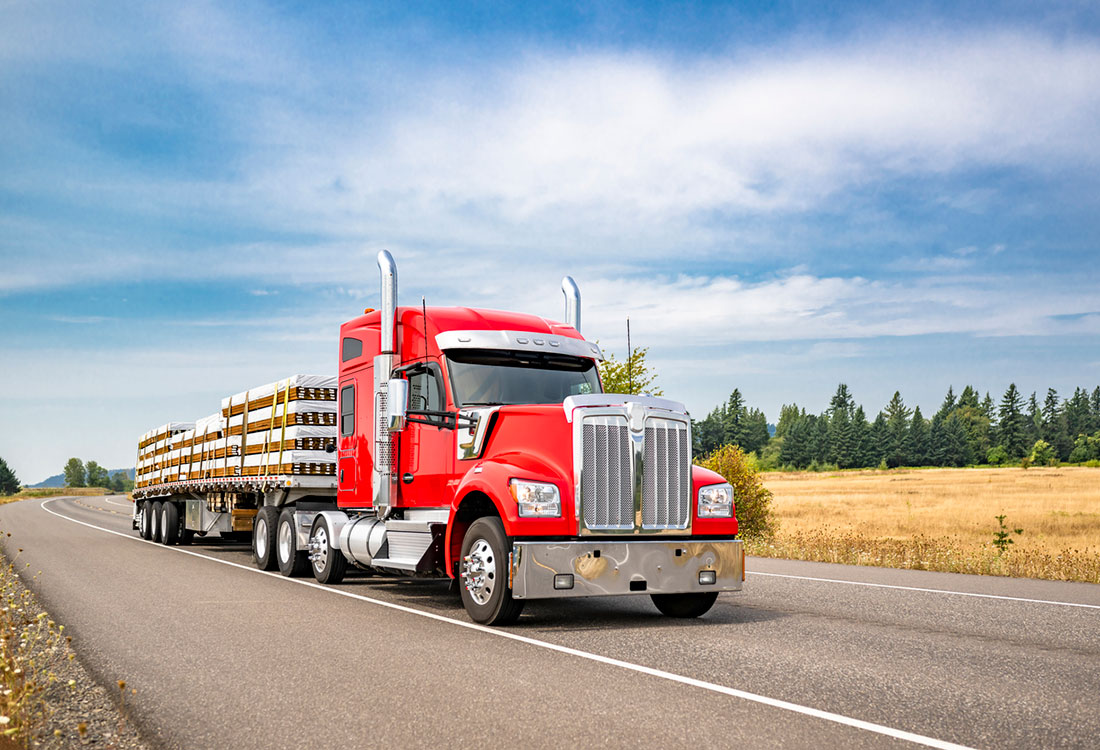
Cross-border trucking markets are facing a significant tightening of capacity alongside heightened regulatory enforcement, creating logistics pressures along both the U.S.-Canada and U.S.-Mexico corridors. Shippers are seeing elevated transit costs and are being urged to secure freight capacity earlier than usual.
The U.S. – Canada Corridor
- Market tightness: The newly launched North American Cross-Border Freight Index (NAX) from TRAFFIX shows Canadian shipping lanes experiencing tighter truck availability than Mexican corridors. Experts recommend building scheduling buffers specifically for Canadian ports of entry.
- Labour and compliance crackdowns: Ottawa has intensified inspection blitzes targeting driver misclassification, particularly in Ontario, by targeting illegal “Driver Inc.” structures. Unpaid border wait times continue to fuel friction over wage-theft violations.
- Driver supply declines: Trucking HR Canada reports consecutive monthly drops in active drivers seeking work, deepening an ongoing shortage.
- Carrier expansion:S.-based IMC Logistics opened its first non-U.S. facility in Toronto to bolster cross-border drayage operations.
The U.S. – Mexico Corridor
- Phantom capacity: Metrics suggest an abundance of trucks, but real cross-border availability remains scarce, a gap driven by too few drivers who meet the strict compliance and security clearances required for northbound entry.
- Cabotage crackdown:S. Customs and Border Protection has ramped up enforcement at the southern border, with multiple Mexican truckers losing commercial visas for domestic freight (cabotage) violations.
- Automotive supply-chain pivot: UPS launched its first heavy airfreight service connecting Mexico directly to its automated North American ground network, bypassing highway congestion to protect industrial supply chains.
- Nearshoring momentum: Despite dips in heavy-vehicle exports after earlier U.S. tariffs, companies continue to redesign networks around proximity to Mexico rather than the lowest cost. A $10 billion automated freight infrastructure project between Laredo and Monterrey is moving forward to bypass traditional border delays.
Canadian Regulatory and Safety Developments
- “Chameleon carrier” loophole: The Ontario Trucking Association and Canadian Trucking Alliance are pressing Ottawa to operationalize a real-time national database to prevent rogue operators from reopening under new names after being shut down for safety failures.
Sustainability and Fleet Electrification
- C. Electra pilot: The Vancouver Fraser Port Authority and the province launched the Electric Container Trucking Program, putting zero-emission trucks into service with five local carriers, including Montreal-headquartered Simard Westlink Inc..
- Unattended software updates: Volvo Trucks North America introduced unattended over-the-air software updates, allowing fleets to perform system upgrades without a driver present.
Broader Industry Updates
- Funding and infrastructure: A U.S. House committee advanced a funding bill including $200 million for truck parking, as domestic manufacturing output trends upward.
- Autonomous trials: Cabless autonomous trucks are scaling real-world tests on public roads, including runs between Ease Logistics warehouses in Ohio.
The bottom line for shippers: capacity is tight, compliance scrutiny is rising, and lead times matter more than ever. Planning ahead and working with a partner who coordinates both trucking and customs is the best defence against delays and cost surprises.
For more information, contact Melanie Basu, Truck Services.
Ocean Freight Market Update
Global ocean freight capacity remains extremely tight across major trade lanes as early peak season demand, ongoing geopolitical disruptions, and carrier capacity management continue to strain available space.
Vessel utilization remains high, increasing the likelihood of rolled cargo and contributing to elevated spot market rates.
Many shippers have moved shipments forward, hoping to avoid expected higher fuel costs and space limitations, while others have held back orders, trying to mitigate both tariffs and rising shipping costs.

Current Market Conditions
Tight Capacity and Port Congestion
Global shipping capacity remains constrained, driven largely by ongoing vessel diversions around the Suez Canal. These re-routings can add 10 to 20 days to transit times and are contributing to congestion and transshipment bottlenecks at major global hubs.
Rising Freight Rates
Ocean carriers continue to implement General Rate Increases (GRIs) and additional surcharges across key trade lanes as demand outpaces available capacity. Spot rates remain elevated and are expected to stay under upward pressure in the near term. At the same time, with upwards of 20% of the world’s oil exports disrupted, fuel prices continue to escalate with no immediate end to the conflict in sight.
Recommendation
Given current market conditions, importers and exporters are strongly encouraged to book ocean freight several weeks in advance of their intended shipping dates. Early booking can help secure space, reduce the risk of cargo being rolled to a later vessel, and minimize potential supply chain disruptions. This is especially important as we head into the busy inventory restocking months of July and August.
Despite these ongoing disruptions, the global supply chain has remained remarkably resilient. However, if the conflict continues and shipping costs climb even higher, the inevitable result will be supply-driven inflation.
For more information, contact Monserrat Vazquez, Manager – Freight Solutions.
Global Spotlight Quiz

Name the city with an iconic TV Tower
- Major seaport and transportation hub with a rich naval history.
- Popular tourist destination in Asia, known for its beautiful beaches and historical sites.
- Popular location for international film and television productions.
- Known for its beer – hosts a famous beer festival every summer and has an interactive beer museum.
- Renowned for its beautiful cherry blossoms in the spring.
- Hosted the sailing events of the 2008 Summer Olympics.
Answer: Qingdao, China

For more information about shipping freight to or from this city, contact Monserrat Vazquez, Manager – Freight Solutions.
Quick Tip
The perils of being under insured
Make sure you read the fine print before purchasing insurance abroad for freight shipments. A common mistake is to assume that minimum insurance gives you some degree of protection against all perils when, in fact, it actually excludes many perils. Protect your business interests by ensuring you buy a policy that gives you protection against all perils.

At Your Service
Bowen Zhu
Ocean Services - Imports
Bowen Zhu has been a member of Universal’s Ocean Services team at Head Office since October 2022. Bowen’s main focus is handling ocean imports, both FCL & LCL, from various origin points worldwide, each with unique and often complicated shipping requirements.
Bowen has excelled in this challenging role, developing his knowledge, and becoming an integral part of our team. He has gained valuable experience in all areas of ocean import cargo handling and always provides our clients with top level service.
While we do rely on his strengths and abilities in managing his present role, what really stands out is his attitude and willingness to do a little extra for both our clients and in supporting his team members. It is this extra effort that truly makes Bowen an extremely valuable and respected member of our team.
Bowen can be reached by phone (905) 882-4880, ext. 1233 or by email.

Ocean Services - Imports
SMART Logistics
Controlling how freight moves through your supply chain could save you thousands – or more.
Working with us means someone always asks: how can we make this shipment better?
Single-sourced trucking, customs clearance and distribution to expedite your freight shipments between the U.S. and Canada.
Route is produced monthly for the clients of Universal Logistics. Reader comment and story ideas are welcome. Comments of general interest to all Route readers will, with the permission of the writer, be published. Copyright © 2026 Universal Logistics Inc. All rights reserved. Reproduction for any commercial use is strictly prohibited.
Route is produced by Universal Logistics. Editor: Bettina Scharnberg. Email: bscharnberg@universallogistics.ca While every effort has been made to ensure the accuracy of information contained herein, Universal Logistics accepts no responsibility or liability for errors or omissions. Written correspondence should be forwarded to:
Universal Logistics Inc.
125 Commerce Valley Drive West
Suite 750, Thornhill, Ontario L3T 7W4
Tel: 905-882-4880 Fax: 905-882-2250
Attention: Bettina Scharnberg