
IEEPA Tariff Refunds - Preparing for U.S. CBP’s New Refund Process
IEEPA Refunds – Here’s What You Need To Know
Following a Court of International Trade (CIT) order directing U.S. Customs and Border Protection (CBP) to begin refunding International Emergency Economic Powers Act (IEEPA) tariffs, CBP has outlined a new process and system to facilitate those refunds. This alert summarises the key developments and the steps importers should take now to ensure they are ready to receive refunds without delay.
Background: Key Developments
4 March 2026 — The CIT issued an order directing CBP to begin the process of refunding all tariffs collected under IEEPA.
6 March 2026 — CBP advised the CIT that it was unable to issue refunds immediately and was developing a new system to process claims, which was estimated to take approximately 45 days to complete. CBP also confirmed that, as of 6 February 2026, all refunds are issued electronically via Automated Clearinghouse (ACH) only.
12 March 2026 — The CIT required CBP to provide a progress report. CBP confirmed that the new CAPE portal (see below) is currently 70% complete, with the processing component estimated at 40%.
CBP’s New Refund System: CAPE
CBP is building a new system, the Consolidated Administration and Processing of Entries (CAPE), which will be the dedicated platform for processing IEEPA tariff refunds. Key features include:
- Importers and their brokers will be able to upload a CSV file listing the entries for which IEEPA refunds are being requested.
- CAPE will validate the CSV file against the Automated Commercial Environment (ACE) and the relevant entry data.
- Refund amounts will be calculated as the IEEPA duty paid, less the applicable Chapter 1–97 duty that would otherwise be owed.
- Upon review, CAPE will initiate liquidation or reliquidation for the listed entries and will automatically set liquidation/reliquidation dates based on the date the CAPE declaration is accepted.
- CBP will retain a review period between acceptance of the CAPE declaration and the new liquidation date to manually review entries as required.
- CAPE will be released in phases, with components made available to the public as they are completed.
CBP’s Position (Declaration of 6 March 2026):
“CBP is making all possible efforts to have this new ACE functionality ready for use in 45 days. This new process will require minimal submission from importers. It will also minimize errors by ensuring accurate IEEPA refund calculations through system validations and by allowing a review period for CBP to resolve any discrepancies with the importer and confirm that no other outstanding enforcement issues exist or that no revenue is owed. The process will be simpler and more efficient than the existing functionalities, and CBP will provide guidance on how to file refund declarations in the new system.”
Action Required: Steps to Take Now
While the CAPE system is being finalized, importers should take the following steps now to ensure they are ready to receive refunds without delay.
Step 1: Enrol in the ACH Refund Program on ACE
As of 6 February 2026, CBP issues all refunds electronically via ACH only. Importers must have an ACH set up in ACE with a valid US bank to receive refunds.
- Log in to the ACE Portal and confirm your ACH refund banking information is accurate and up to date.
- If not yet enrolled, submit an ACH Refund Program application through ACE and designate a US bank account. Importers already enrolled do not need to reapply.
- If you are currently on PMS (Periodic Monthly Statement), you will still need to add your banking information under the ACH Refunds tab in ACE.
- If you do not have a US bank, Universal can act as your “Notify Party” — refunds will be directed to Universal and forwarded to you. If you cannot designate Universal as the Notify Party through the ACE portal, you can submit CBP Form 4811 to CBP in lieu of filing through the portal.
Step 2: Confirm Access to Your ACE Account (Top Account)
Having an Importer of Record (IOR) number does not automatically grant access to your trade data in ACE. A “Top Account” application must be submitted separately to link your IOR number to your ACE profile.
- Sign up for or confirm your ACE Portal account. Instructions are available here.
- If a CBP Form 5106 was previously filed on your behalf, the contact details on that form may need to be updated, as ACE Portal accounts can only be set up by the person whose contact information appears on the 5106.
- Establishing a Top Account gives importers direct access to their trade data at any time, reducing reliance on a customs broker to retrieve information on their behalf.
How Universal Logistics Can Help
We are available to assist you with:
- Setting up or verifying your ACE Portal account and Top Account access
- Enrolling in or updating your ACH Refund Program details
- Acting as the Notify Party for importers without a US bank
- Preparing and submitting entries via CAPE once the system is live
- Reviewing your entry data to identify and quantify potential IEEPA refunds
For more information, contact Matthew Williamson, Consultant – Trade Advisory – Customs Consulting Services.

Expanding Your Reach: Universal Logistics’ Ocean & Air Export Services
In an era defined by global trade realignment, the ability to reach new markets has become one of the most powerful competitive advantages a business can hold. Across North America, companies of all sizes are recognizing that diversifying their customer base beyond domestic borders is no longer simply an option. For many, it is becoming a strategic imperative.
Whether you are a seasoned exporter looking to streamline your international operations or a business exploring overseas markets for the first time, having the right logistics partner by your side can make all the difference between a seamless delivery and a costly misstep.
Why Export? The Case for Going Global
Markets outside North America represent an enormous and largely untapped opportunity for many businesses. Demographic growth, rising consumer spending power, and ongoing infrastructure development across Asia, Latin America, Africa and beyond are driving sustained demand for a wide range of goods and services. At the same time, shifting trade relationships and evolving tariff regimes are prompting companies to diversify their customer geographies, reducing dependence on any single market and building long-term resilience.
The benefits of exporting extend beyond revenue growth. Companies that successfully enter international markets often report improvements in operational efficiency, stronger brand recognition and greater ability to weather domestic downturns. Access to a broader customer base can also support higher production volumes and improved economies of scale. For businesses that have built strong products or services at home, the global market represents a natural extension of that success.
Did you know? Canada and the United States together rank among the world’s largest exporting nations. Yet the majority of small and mid-sized businesses in both countries have not fully explored the potential of international trade.
From Canada and the U.S. to the World
Universal Logistics offers comprehensive ocean and air export services from origins across Canada and the United States. Our team combines deep carrier relationships, extensive routing knowledge and a commitment to competitive pricing to ensure your shipments reach their destinations efficiently and reliably.
Whether your cargo moves by sea in full container loads, less-than-container consolidations or breakbulk, or by air on express or standard services, we have the capability and experience to manage the full journey on your behalf. We handle the complexity of export documentation, customs clearance and carrier bookings so that you can focus on what matters most: your business and your customers.
Our well-established operations in both Canada and the United States serve as the gateway to a global network of air and ocean carriers, giving your shipments access to virtually any destination worldwide. We work with a carefully selected group of international freight forwarders and customs brokers who share our commitment to service quality, giving you confidence that your cargo is in capable hands from origin through to final delivery.
The Importance of a Trusted Destination Network
Export logistics does not end when your shipment leaves the port or airport of origin. In many ways, that is where the real complexity begins. Import regulations, local customs procedures, documentation requirements and destination delivery coordination all require expertise and local knowledge that goes well beyond what a carrier booking alone can provide.
Our network of long-standing overseas partners ensures that your export cargo is handled with the same care and professionalism at destination as it receives at origin. These relationships, built over many years of collaborative service, mean that your shipment is supported by people who understand the local regulatory environment, maintain strong relationships with customs authorities, and are committed to resolving any issues that may arise quickly and effectively.
For your overseas clients, this matters enormously. A smooth and transparent import experience reflects directly on your business and reinforces the trust that underpins any strong commercial relationship. Universal Logistics serves as a seamless extension of your team, ensuring your customer commitments are met at every stage of the journey.
Simplifying the Export Process
For businesses new to international trade, the prospect of exporting can feel daunting.
Export controls, harmonized tariff classifications, certificates of origin, letters of credit and the requirements of destination customs authorities are just some of the considerations that need to be managed. Getting these details right is not optional. Errors or omissions can result in delays, fines or even the refusal of goods at the destination.
Universal Logistics brings many years of experience handling exports across all modes and a wide range of commodity types. Our team can guide you through the regulatory requirements specific to your destination markets, identify the most cost-effective and time-efficient routing options and coordinate all the moving parts required for a successful export. We make the process straightforward so that you can move forward with confidence.
Ready to Explore Export Opportunities?
Whether you are shipping your first international order or looking to optimize an established export program, Universal Logistics is ready to help. Contact our team today to discuss your requirements and discover how our ocean and air export services can help your business reach its global potential.
For more information, please contact Monserrat Vazquez, Manager – Freight Solutions, who can provide the expert advice and guidance you need to successfully coordinate your next international export.
New 10% U.S. Import Tariff: What Businesses Need to Know
Following the U.S. Supreme Court’s February 20, 2026, ruling that prior tariffs imposed under the International Emergency Economic Powers Act (IEEPA) were unlawful, the Trump administration moved quickly to replace them.
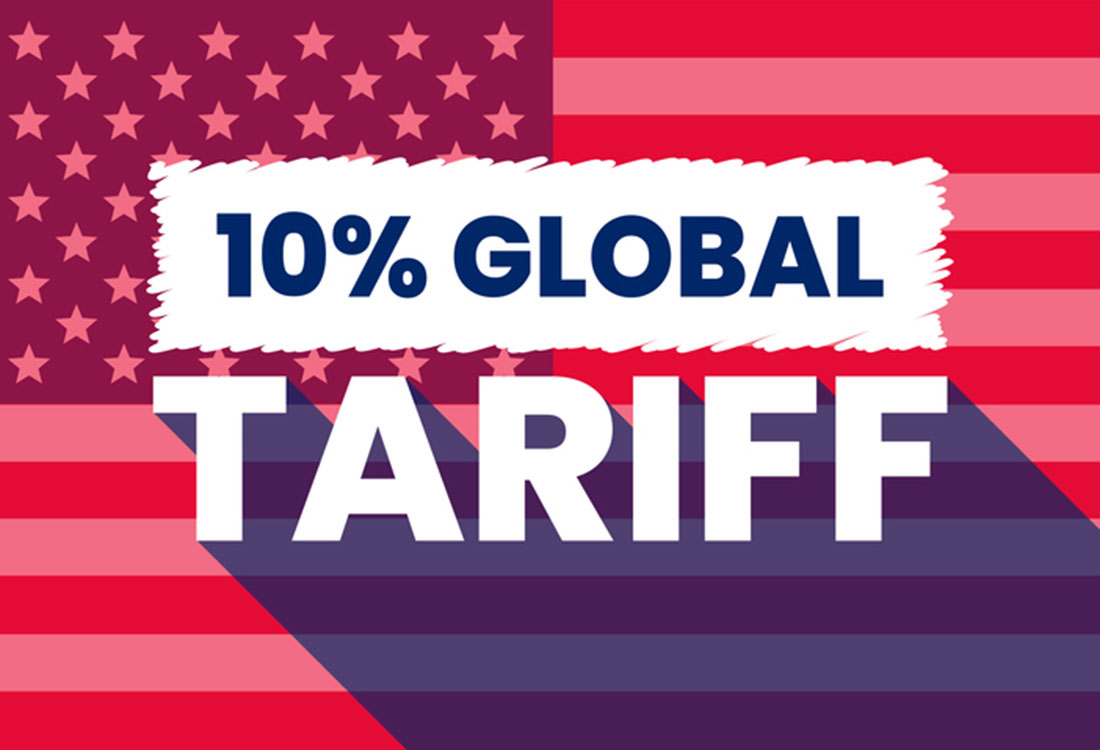
Within hours, a new global 10% tariff was imposed under Section 122 of the Trade Act of 1974, effective February 24, 2026, applying to most imported products from all countries for 150 days.
What Is Exempt?
Not all goods are affected. Key exemptions include:
- USMCA-qualifying goods from Canada and Mexico
- Products already subject to Section 232 tariffs, such as steel, aluminum and automobiles
- Critical minerals
- Pharmaceuticals
- Certain electronics
For Canadian and U.S. businesses, goods moving under a valid USMCA claim remain protected, but non-qualifying imports will face the additional duty on top of existing rates.
What to Watch For
The situation continues to evolve. Key developments to keep on your radar:
- The administration has signalled it may increase the rate to 15%, the maximum permitted under Section 122
- New Section 301 investigations are underway that could lead to further country or sector-specific tariffs in the months ahead
- The surcharge is currently set to expire on July 24, 2026, though Congress has the ability to extend it
Duty Drawback Opportunity
Businesses that both import and export goods during this 150-day window should take note. Duty drawback is available under Section 122 tariffs, allowing recovery of up to 99% of duties paid on eligible entries. This is a meaningful cost-recovery opportunity worth discussing with your customs broker now.
How Universal Logistics Can Help
The tariff landscape is shifting quickly, and the cost implications for your supply chain can be significant. Our team is here to help you make sense of the changes and take the right steps to protect your business. We can assist with:
- Reviewing your imports to assess exposure under the new Section 122 tariff
- Confirming USMCA eligibility to ensure that qualifying goods do not pay unnecessary duties
- Identifying duty drawback opportunities on eligible shipments
- Keeping you informed as the situation develops, including any rate increases or new Section 301 actions
Do not wait for the next change to catch you off guard. Contact Matthew Williamson, Consultant – Trade Advisory and let us help you navigate the current tariff environment with confidence.
Impact of Middle East Conflict on Global Supply Chains
Ongoing tensions in the Middle East are casting a long shadow over international trade, with ripple effects being felt across maritime shipping, air cargo, and global supply networks. From elevated insurance premiums to shifting transit routes, businesses that rely on the movement of goods across international borders are navigating a complex and evolving landscape.
Maritime Shipping: Navigating Heightened Risk
The Gulf region and surrounding waterways remain at the centre of growing concern. Key chokepoints, including the Strait of Hormuz, through which a significant share of the world’s oil and liquefied natural gas passes, have become focal points of risk assessment for vessel operators and their insurers.
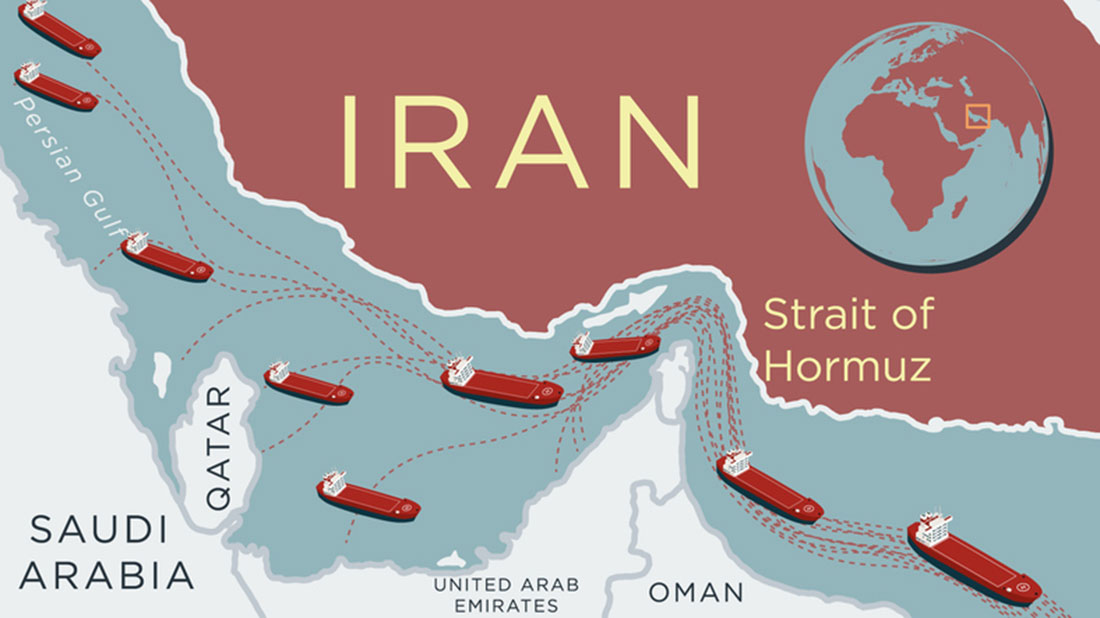
The potential for disruption to navigation in and around these strategic corridors has prompted a range of defensive responses from shipping lines.
Many carriers have implemented vessel diversions, suspended sailings on affected routes or halted transits through certain areas altogether. While these measures are prudent from a safety and liability perspective, they introduce meaningful delays and capacity constraints for cargo owners. Longer alternative routing means extended transit times, higher fuel consumption and tighter vessel availability.
War-risk insurance premiums have surged in response to the heightened threat environment, with additional surcharges being applied to shipments transiting the region. These costs are increasingly being passed along the supply chain, adding to already elevated freight rates on key trade lanes. Where traffic is diverted from affected zones, alternative hub ports, particularly in the wider Middle East and Southeast Asia, may experience increased congestion, further straining schedules and equipment availability.
Key consideration: Shippers with cargo moving through or near the Gulf region should work closely with their logistics partners to assess routing alternatives, review insurance coverage, and build additional lead time into supply chain planning.
Air Cargo: Longer Routes, Higher Costs
The impact on air freight has been equally pronounced. Airspace restrictions across several parts of the Middle East have forced carriers to implement significant network adjustments, rerouting flights along alternative corridors to avoid high-risk zones. These detours add flight hours, increase fuel burn and reduce the overall efficiency of air cargo operations.
As a result, transit times on affected lanes have lengthened and schedule reliability, already under strain from broader operational pressures, has become harder to guarantee. For time-sensitive shipments such as perishables, pharmaceuticals or high-value electronics, these disruptions have real commercial consequences. Capacity constraints may also emerge as carriers adjust fleet deployment to reflect the new operating environment, making early booking and proactive planning even more critical.
Broader Supply Chain Implications
Beyond the direct impact on transportation, the conflict has the potential to affect supply chains well beyond the region itself. Disruptions to the flow of energy, petrochemicals and industrial inputs, many of which originate in or transit through the Middle East, can have cascading effects across manufacturing, retail, and food systems worldwide. A shock to regional energy supply, for example, can influence production costs and raw material availability across a broad range of sectors.
Freight rate volatility is likely to persist as operators adapt to rapidly shifting conditions. Equipment imbalances may develop as containers and aircraft are redirected away from established corridors. Contractual performance, including adherence to agreed transit times and service standards, may come under pressure as carriers navigate uncertainty. Importers and exporters alike should be prepared for a degree of unpredictability in the near- to medium-term and should build contingency planning into their supply chain strategies.
Universal Logistics is actively monitoring developments and working with our carrier and partner network to identify the most reliable routing options for our clients. We encourage clients with shipments moving through affected regions to reach out to our team for guidance and support in navigating these challenges.
For more information, contact David Lychek, Director – Ocean & Air Services.
Global Spotlight Quiz

Name the European city with a world-famous waterfront
- Holds the Guinness Book of Records title for being the Capital of Pop – thanks, in part, to four lads that made a big splash on the music scene in the 1960s.
- Home to Europe’s longest-established Chinese community, boasting the largest Chinese Arch in Europe.
- In 1715, the first-ever commercial wet dock opened in this city.
- Home to two historic football clubs.
- In 1830, the world’s first ever passenger railway line opened here.
- The clock faces on the city’s Liver Building are bigger than Big Ben.
Answer: Liverpool, UK

For more information about shipping freight to or from this city, contact Monserrat Vazquez, Manager – Freight Solutions.
Quick Tip
Two ways to control the cost of your freight shipments
Looking for new ways to reduce your shipping costs? Start by ensuring you are not wasting money by carrying weight that can be removed. Then make sure your shipping cartons are not bigger than they need to be.
Look for every possible saving, but never do anything that weakens the carton to the point where it could no longer carry your goods safely. That would be a penny-wise, pound-foolish mistake.

At Your Service
Customs Consulting Services (USA)
- Cody Keser, LCB, CCS, Consultant – Regulatory Compliance
- Matthew Williamson, CCS, Consultant – Trade Advisory
Universal’s US Customs Consulting Services team at our Buffalo, NY office is jointly led by Cody Keser, Consultant – Regulatory Compliance and Matthew Williamson, Consultant – Trade Advisory.
Cody joined our US Customs Operations team in July 2021, where he was responsible for processing the customs clearance of import truck shipments. As a result of his exceptional work and increased compliance responsibilities, Cody was promoted to Team Leader – Customs Consulting Services (USA) in June 2022. Throughout his time at Universal, Cody has proven to be a valuable resource to our clients and his colleagues, and in February 2026, he was promoted to Consultant – Regulatory Compliance. Cody is a Licensed Customs Broker (LCB) and Certified Customs Specialist (CCS).
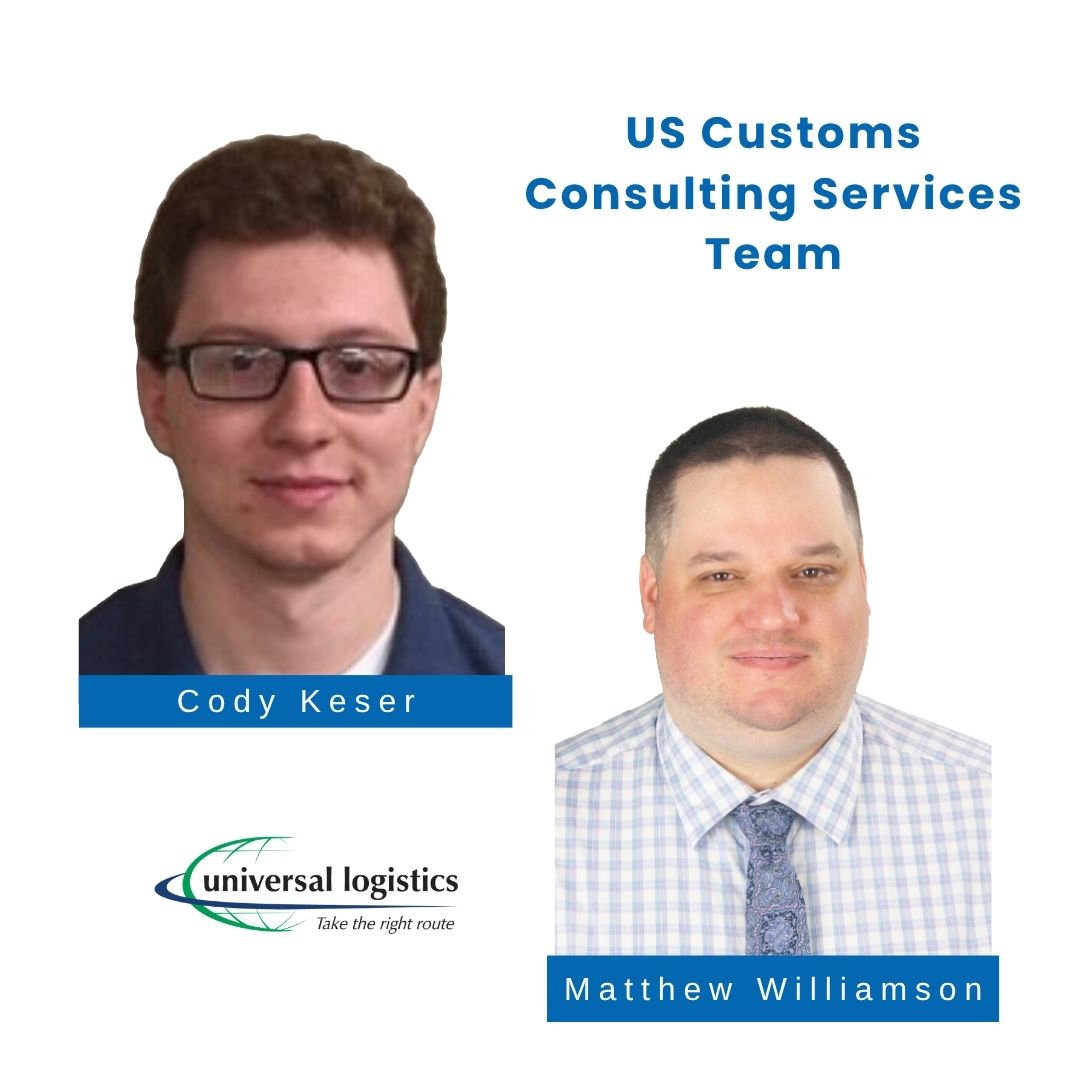
Matthew joined our US Customs Consulting Services team in June 2025, where he was responsible for a wide variety of customs compliance functions. Matthew has proven to be a valuable resource in navigating the compliance requirements of both our clients and his colleagues and, as a result, in February 2026, he was promoted to Consultant – Trade Advisory. Matthew passed his Licensed Customs Broker (LCB) exam (pending final approval by US Customs) and is a Certified Customs Specialist (CCS).
For more information on our US Customs Consulting service, contact Cody Keser or Matthew Williamson.
SMART Logistics
Controlling how freight moves through your supply chain could save you thousands – or more.
Working with us means someone always asks: how can we make this shipment better?
Single-sourced trucking, customs clearance and distribution to expedite your freight shipments between the U.S. and Canada.
Route is produced monthly for the clients of Universal Logistics. Reader comment and story ideas are welcome. Comments of general interest to all Route readers will, with the permission of the writer, be published. Copyright © 2026 Universal Logistics Inc. All rights reserved. Reproduction for any commercial use is strictly prohibited.
Route is produced by Universal Logistics. Editor: Bettina Scharnberg. Email: bscharnberg@universallogistics.ca While every effort has been made to ensure the accuracy of information contained herein, Universal Logistics accepts no responsibility or liability for errors or omissions. Written correspondence should be forwarded to:
Universal Logistics Inc.
125 Commerce Valley Drive West
Suite 750, Thornhill, Ontario L3T 7W4
Tel: 905-882-4880 Fax: 905-882-2250
Attention: Bettina Scharnberg