
U.S. Announces Import Bans and Section 338 Tariff Changes of Certain Canadian Goods
On September 8, 2026, US President Donald Trump issued a number of Proclamations that took effect as early as September 15, 2026, on certain Canadian-origin goods.
Importers must closely review the following, as these changes may significantly affect tariffs or the ability to import certain Canadian-origin products into the United States.
Changes to certain Section 338 Tariffs
- Modifying the Scope of Products of Canada Subject to the Additional Duties Imposed to Offset Canadian Discrimination Against the United States with Respect to Motor Vehicles
Effective 12:01 a.m. ET on September 15, 2026, this list of additional Canadian origin goods subject to 50% tariff became effective. The revised list of tariffs may be found in ANNEX I, a complete list of additions, e.g. certain paper products, tooling, electronic goods, and furniture, and certain steel and aluminum, along with deletions, e.g. salt, Portland cement, Tissue Paper, Fishing Rods, etc., may be found in ANNEX II.
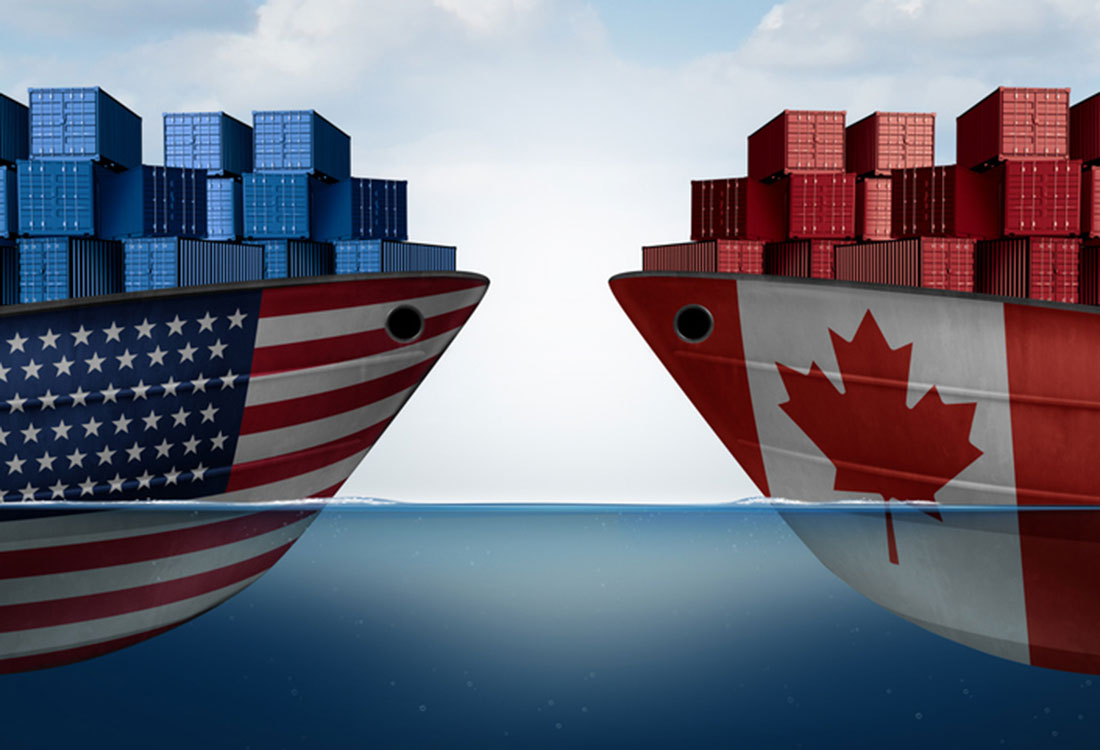
The original Proclamation 11046 imposing the 50 percent Section 338 tariff on certain Canadian origin goods exempted goods subject to Section 232 tariffs – these adjustments now remove that exemption and both tariffs, under Section 338 and Section 232, may apply to the same goods, equating to a possible 100 percent tariff in certain circumstances:
The duties imposed pursuant to Proclamation 11048, as modified in this proclamation, shall apply in addition to duties imposed pursuant to section 232 of the Trade Expansion Act of 1962, as amended (19 U.S.C. 1862). These changes shall be effective with respect to goods entered for consumption, or withdrawn from warehouse for consumption, on or after 12:01 a.m. ET on September 15, 2026.
Examples of Section 232 additions to the list, which may now be subject to a 100% stacked tariff, include:
| 7308.90.30 | Iron or steel columns, pillars, posts, beams and girders, not in part of alloy steel |
| 7308.90.60 | Iron or steel columns, pillars, posts, beams and girders, nesoi |
| 7308.90.95 | Iron or steel structures (excluding prefabricated structures) and parts of structures, nesoi |
| 7604.10.10 | Aluminum non-alloyed profiles |
| 7604.10.30 | Aluminum non-alloyed bars and rods, with a round cross section |
| 7604.10.50 | Aluminum non-alloyed bars and rods, without a round cross section |
| 7604.21.00 | Aluminum alloy hollow profiles |
| 7604.29.10 | Aluminum alloy profiles (other than hollow profiles) |
| 7604.29.30 | Aluminum alloy bars and rods, with a round cross section |
| 7604.29.50 | Aluminum alloy bars and rods, without a round cross section |
| 7608.10.00 | Aluminum non-alloyed tubes and pipes |
| 7608.20.00 | Aluminum alloy tubes and pipes |
- Modifying the Scope of Products of Canada Subject to the Additional Duties Imposed to Offset Canadian Discrimination Against the Commerce of the United States with Respect to Alcoholic Beverages
Effective 12:01 a.m. ET on September 15, 2026, certain Canadian origin products became subject to a 50% tariff (e.g., cheese, Hides/Leather, Motorboats). A full list may be found in ANNEX-1.
The original Proclamation 11046 imposing a 50 percent Section 338 tariff on certain Canadian origin goods exempted goods subject to Section 232 tariffs – these adjustments now remove that exemption and both tariffs, under Section 338 and Section 232, may apply to the same goods, equating to a possible 100 percent tariff in certain circumstances:
The duties imposed pursuant to Proclamation 11046, as modified in this proclamation, shall apply in addition to duties imposed pursuant to section 232 of the Trade Expansion Act of 1962, as amended (19 U.S.C. 1862). These changes shall be effective with respect to goods entered for consumption, or withdrawn from warehouse for consumption, on or after 12:01 a.m. ET on September 15, 2026.
Canadian origin goods banned from import
- Excluding Certain Canadian Alcoholic Beverages from Importation into the United States in Response to Continued Discrimination Against the Commerce of the United States with Respect to Alcoholic Beverages
Effective 12:01 a.m. ET on September 29, 2026, certain Canadian-origin alcoholic beverages are excluded from importation into the United States (i.e., banned). A full list may be found in the ANNEX.
- Excluding Certain Canadian Products from Importation into the United States in Response to Continued Discrimination Against the Commerce of the United States with Respect to Dairy
Effective 12:01 a.m. ET on September 29, 2026, certain Canadian-origin products (e.g., Whey Protein concentrates, Whey, Modified Whey, Molasses, and Non-alcoholic beer) are excluded from importation into the United States (i.e., banned). A full list may be found in the ANNEX.
- Excluding Certain Canadian Products from Importation into the United States in Response to Continued Discrimination Against the Commerce of the United States with Respect to Motor Vehicles
Effective 12:01 a.m. ET on September 29, 2026, certain Canadian-origin motorcycles are excluded from importation into the United States (i.e. banned) as identified in the ANNEX.
Importers should take note – CUSMA/USMCA does not shield covered goods.
The White House Fact Sheet confirms that Section 338 duties apply to all covered goods made in Canada, regardless of whether the goods originate under CUSMA/USMCA. This breaks the pattern that importers have relied on for the past 18 months, in which a valid origin certification generally provided relief under IEEPA and Section 122 measures. A CUSMA/USMCA certificate of origin will not exempt a listed product here.
If you are unsure whether your products fall under any of the three Annexes, our US Customs Consulting Services regulatory team can help you determine their classifications. Reach out to Brian Rowe, Director – Customs Compliance & Regulatory Affairs, or your Universal Logistics representative.
Canada counter-tariffs on certain US goods now in effect
In response to the ongoing trade dispute, Canada’s new counter-tariffs (surtaxes), on a wide range of goods imported from the United States went into effect on September 8, 2026.
Effective September 8, 2026, at 12:01 am ET, certain goods imported into Canada and originating in the U.S. became subject to a surtax of 15, 25, or 50 percent, in accordance with the United States Surtax Order (2026). The Schedules to the United States Surtax Order (2026) contain a complete list of goods subject to the surtax and the applicable surtax rate.
These additional tariffs only apply to goods originating from the U.S., which shall be considered as those goods eligible to be marked as a good of the U.S. in accordance with the Determination of Country of Origin for the Purpose of Marking Goods (CUSMA Countries) Regulations.
The following goods are not subject to the surtax:
- goods that are classified under a tariff item of Chapter 98 or 99 of the List of Tariff Provisions that is not set out in Schedule 4, even if the goods are otherwise classifiable under a tariff item set out in Schedule 1, 2 or 3;
- goods that are in transit to Canada on the day on which this Order comes into force;
‘In transit to Canada’ refers to goods bound for Canada but not yet arrived there and under the control of a carrier. Importers must have proof that such goods were in transit to Canada to demonstrate that the surtax is not applicable. Such proof may include the following documentation: shipping documents (for example, a bill of lading), report of entry documents, and cargo control documents. Such proof may be requested at any time by a CBSA officer. - goods that are imported from the United States at a port of entry on Campobello Island, New Brunswick, if the goods…
- are imported by a person who ordinarily resides on Campobello Island and who is returning after an absence from Canada of less than 24 hours,
- are in the person’s possession or form part of their baggage, and
- are for personal or household use;
- goods that are imported under a permit issued under subsection 8.3(3) of the Export and Import Permits Act, if the permit specifies that it is issued for the purposes of the Import for Re-Export Program.
Remission of Surtax
The Department of Finance Canada has updated the United States Surtax Remission Order (2025) to include the following remission for the current tariffs:
Remission — public health, public safety and national security
Subject to section 5, remission is granted of surtaxes paid or payable under the United States Surtax Order (2025-1), the United States Surtax Order (2026), the United States Surtax Order (Steel and Aluminum 2025) or the United States Surtax Order (Motor Vehicles 2025) in respect of goods imported for use by any of the following entities for the purpose of health care, public health, public safety, national defence or national security.
Remission — health care
Subject to section 5, remission is granted of surtaxes paid or payable under the United States Surtax Order (2025-1), the United States Surtax Order (2026), the United States Surtax Order (Steel and Aluminum 2025) or the United States Surtax Order (Motor Vehicles 2025) in respect of goods imported.
Remission — manufacture, processing, production or packaging
Subject to section 5, remission is granted of surtaxes paid or payable under the United States Surtax Order (2025-1), the United States Surtax Order (2026) or the United States Surtax Order (Steel and Aluminum 2025) in respect of goods imported for use, in Canada, in the manufacture or processing of any good, in the production of any agricultural product or in the packaging of a food product or beverage.
Clients of Universal Logistics are requested to reach out to your Client Relations Representative to advise if any of the above conditions pertain to your imports so we may take advantage of the relief available and apply the relief at time of import.
If you are unsure whether your products are subject to these countermeasure tariffs, our Customs Consulting Services regulatory team can help you determine the classifications. Reach out to Brian Rowe, Director – Customs Compliance & Regulatory Affairs, or your Universal Logistics representative.
Canadian Customs Consulting Services Keep Compliance on Track
Customs compliance is more than getting a shipment released at the border. The choices made before goods move – from tariff classification and valuation to origin, marking, and documentation – can affect duty costs, supply chain timing, and a company’s exposure to penalties.
Universal Logistics’ Canadian Customs Consulting Services team helps importers manage those decisions with practical, informed guidance. Working alongside our customs operations services, the team supports clients before clearance, after release and when more complex compliance questions arise.
Getting the Details Right Before Importing
Accurate product information is the foundation of an effective customs program. Our consultants provide centralized research on product classification and duty rates under Canada’s Harmonized Tariff Schedule, along with guidance on valuation, country of origin, marking, packaging, and labelling requirements.
For businesses seeking greater certainty, the team can assist with applications for CBSA advance rulings on tariff classification, valuation and origin. A binding ruling can help clarify the appropriate treatment of goods before they are imported, supporting more consistent declarations and reducing uncertainty.
We also assist with import permits, quota restraints, temporary importation eligibility and other requirements involving government departments. These details can be easy to overlook, but they are often critical to a smooth release process.
Making the Most of Trade Agreements
Free trade agreements can create valuable duty-saving opportunities, but eligibility must be supported by accurate origin analysis and records. Universal Logistics provides consultation on CUSMA/USMCA and other free trade agreements, including origin eligibility, blanket certification preparation and renewal management.
Our Client Tariff Resume brings together a company’s supplier, product, tariff classification, and duty rate information in a single comprehensive reference. Developed through the client’s product knowledge and our customs expertise, it can support clearer internal processes and more consistent customs reporting.
Support Beyond Clearance
Customs obligations do not end once a shipment is released. Our post-clearance services include entry reviews, amendments and refund opportunities, as well as duty drawback filing. Where an adjustment or correction is required, our team can help review the circumstances and prepare the appropriate submission.
We also provide consultation on GST registration, rebates, non-resident issues, excise duty and tax considerations, and CARM security options. For companies with ongoing imports, these services can be an important part of managing total landed cost and maintaining compliance.
Prepared for Reviews and Audits
A proactive compliance program can make a significant difference when CBSA questions an entry or initiates a review. Universal Logistics provides planning and guidance for customs programs such as the Administrative Monetary Penalty System (AMPS), Voluntary Disclosure and Compliance Assessment Reviews. Our consultants can also provide CBSA audit support, helping clients prepare records, review issues and respond with confidence.
With changing tariff measures, evolving trade rules and increasingly detailed customs requirements, businesses need more than a transaction-by-transaction approach. Universal Logistics’ Canadian Customs Consulting Services help clients build a stronger compliance foundation while keeping their focus on the business.
For a practical starting point, ask about a SMART Customs Review – a complimentary review of selected customs entries over a defined period that can identify potential compliance and cost-saving opportunities.
U.S.-Canada Tariffs Add Pressure to Cross-Border Truck Freight
The latest escalation in U.S.-Canada trade tensions is adding new uncertainty to an already complex cross-border freight environment.
Following the collapse of trade talks between the two countries, the United States imposed 50% tariffs on approximately $20 billion to $28 billion worth of Canadian goods. Canada responded with dollar-for-dollar retaliatory tariffs on selected U.S. products beginning September 8, 2026.
While the tariffs affect a range of industrial and consumer products, the consequences extend well beyond the goods directly subject to duties. For trucking companies, manufacturers and shippers, changing trade flows could mean lower freight volumes on some lanes, higher equipment and maintenance costs, additional border administration and increased volatility in transportation rates.
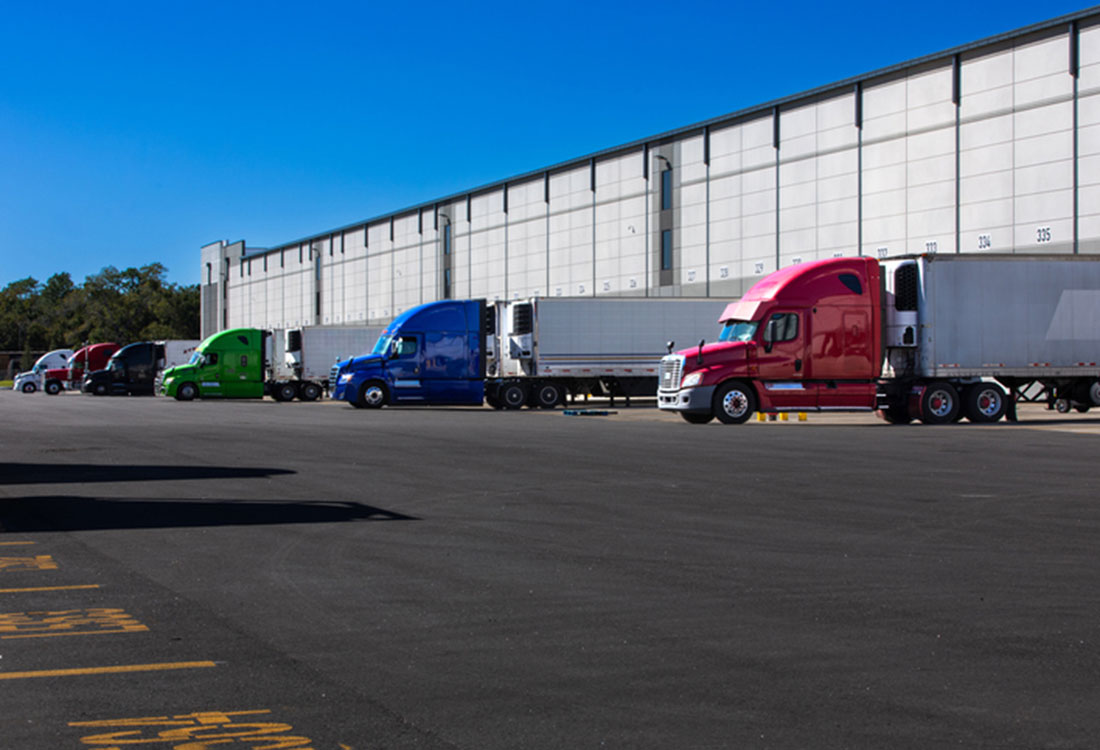
Automotive and Industrial Freight Under Pressure
Medium-duty and heavy-duty trucks became a significant point of disagreement during the trade negotiations, with U.S. tariff relief excluding certain commercial and heavy-duty vehicles.
That creates particular concern for Ontario’s automotive and commercial vehicle manufacturing sector, where production depends heavily on components and finished goods moving repeatedly across the Canada-U.S. border.
Tariffs affecting automotive products, steel and industrial components can increase production costs and reduce manufacturing activity. When factories produce less, there are fewer raw materials, components and finished products moving through the transportation network.
For carriers with significant exposure to automotive and industrial freight, that can translate into fewer cross-border loads and shifting demand on established lanes.
Tariffs Can Destabilize Trucking Rates
One of the less obvious effects of tariffs is the pressure they can place on freight rates.
Cross-border trucking networks depend on balanced freight flows. A carrier moving a load from Canada into the United States typically needs a profitable return load to make the lane sustainable.
If tariffs reduce freight moving in one direction, carriers can be left with fewer backhaul opportunities and more empty miles. To compensate, rates on the loaded portion of the trip may need to rise.
Trade-related changes can also push freight into different transportation corridors. If manufacturers change suppliers, shippers reroute products or companies increase domestic sourcing, capacity can tighten quickly on lanes that previously handled lower volumes.
That creates the potential for spot-market rate increases even in markets where the goods themselves are not directly affected by tariffs.
Border Delays Create Additional Costs
Changing tariff rules can also increase the administrative burden associated with cross-border shipments.
Carriers and shippers may need to provide additional information regarding tariff classification, country of origin, and eligibility under applicable trade rules. Greater scrutiny can mean longer processing times and additional delays when documentation requires review.
For trucking companies, border delays have a direct operational cost. A driver waiting for clearance is not available for another load. Longer dwell times can result in detention charges and other accessorial fees, while missed delivery windows can disrupt subsequent pick ups and deliveries throughout the network.
This makes accurate documentation and close coordination between shippers, carriers and customs brokers increasingly important.
Higher Costs for Truck Parts and Maintenance
Canada’s retaliatory measures target U.S. products including steel, industrial machinery, electronics and other commercial goods. Those categories overlap with many of the products fleets rely on to keep trucks operating.
U.S.-sourced replacement parts, shop electronics, commercial vehicles and other maintenance-related products could become more expensive as reciprocal tariffs take effect. Tariffs on steel and other raw materials can also contribute to higher manufacturing costs for trucks and components.
For carriers, this creates a difficult combination: freight volumes may soften in certain sectors at the same time that the cost of operating and maintaining equipment increases. Fixed expenses, including financing, wages, and insurance, remain regardless of how many loads are available, leaving smaller and mid-sized carriers particularly exposed to sudden changes in freight demand.
Carriers May Need to Adjust Their Networks
If tariff-related disruptions continue, carriers may need to become more flexible in where they deploy equipment. One option is to increase exposure to domestic Canadian freight or to sectors less affected by the trade dispute. Shifting equipment toward intra-Canada corridors can help reduce reliance on cross-border freight, which may experience sudden volume fluctuations.
Carriers may also need to reassess cross-border pricing. Transportation contracts could increasingly include variable surcharges or other mechanisms designed to account for added border costs, delays and changing operating expenses rather than forcing carriers to absorb those costs themselves.
Fleet operators may also look more closely at where replacement parts and maintenance supplies are sourced if tariffs make U.S.-manufactured products significantly more expensive.
What Shippers Should Watch
For shippers, the effects of tariffs may show up in transportation costs before they appear elsewhere in the supply chain. Key areas to monitor include:
- changing truck capacity on established Canada-U.S. lanes;
- increases in detention and border-related accessorial charges;
- higher spot-market rates where freight is being rerouted;
- changes to carrier surcharges and contract pricing;
- reduced backhaul availability on tariff-affected corridors; and
- rising fleet and equipment costs that may eventually be reflected in transportation rates.
The Canada-U.S. freight market is highly interconnected, which means tariffs affecting one industry can quickly create secondary effects across transportation networks. For both carriers and shippers, the coming months will require close attention to freight volumes, lane balance, border requirements and operating costs.
Maintaining flexibility in routing, sourcing and transportation planning will be increasingly important as the trade environment continues to evolve.
For more information, contact William Sanchez, Manger – Truck Services.
US Customs Enhanced Review of Importer of Record Information
US Customs and Border Protection (CBP) have issued the initial step, Accuracy of Importer of Record Data Submitted to CBP which took effect September 18, 2026. As of that date, CBP began an enhanced review of Importer of Record (IOR) accounts and voided any IOR numbers it determined had been provided with incomplete or inaccurate information.
This represents the initial step following US President Donald Trump’s Executive Order of June 3, 2026 titled “Strengthening Customs Enforcement” directing the Department of Homeland Security (DHS) and CBP to undertake a broad overhaul of the rules governing importation into the United States.
If CBP determines that the information provided on a CBP Form 5106 is inaccurate or incomplete, CBP may, as of September 18, 2026, immediately void the associated IOR number.
In the event an IOR number has been voided, the importer will not be able to import goods into the U.S..
- CBP will issue a written notice of this action to an IOR to the email address the IOR most recently submitted to CBP, that notifies the IOR of the basis for voiding the IOR number. If applicable, CBP will copy the customs broker that last filed entry on behalf of the IOR when issuing the notice.
- The notice will include information on how to request reestablishment of the IOR number, including what information must be submitted to CBP to corroborate the identity of the requesting IOR.
- The IOR, or a customs broker with a valid Power of Attorney, may contact CBP at IORProgram@cbp.dhs.gov with questions regarding a voided IOR number.
Importers into the U.S. should ensure their information on file with US Customs is current and valid, via a CBP Form 5106 – Create/Update Importer Identity Form.
A CBP Form 5106, contains the below minimum mandatory information:
- Importer name
- IRS Employer Identification Number (EIN), Social Security Number (SSN), or CBP-assigned importer number
- Mailing address
- Physical location address, if different from the mailing address
- Telephone number
- Email address
Importers must take note of the below legal requirements
Physical Address: The physical address provided for the IOR must be the actual physical location of the business or individual. It cannot be a registered agent, customs broker, freight forwarder, P.O. box, a business service center, or an address of another person or entity.
Email Address: The email address submitted must be valid and belong to the IOR. Customs brokers or third parties may not supply their own email address, or the email address of another person or entity, in place of the IOR’s email address.
Phone Number: The phone number provided must be valid and belong to the IOR. Numbers not associated with the IOR should not be submitted. Customs brokers or third parties may not supply their own phone number, or the phone number of another person or entity, in place of the IOR’s phone number.
US importer clients of Universal Logistics are advised to provide a completed CBP Form 5106 so that we may file on your behalf with US Customs and ensure the existing information is correct and up to date.
For more information, contact Brian Rowe, Director – Customs Compliance & Regulatory Affairs.
Canada–EU Relations Are Deepening. What Could It Mean for Canadian Supply Chains?
Canada’s relationship with the European Union (EU) may be entering a new phase — and for Canadian importers and exporters, the development is worth watching closely.
In September, European Commission President Ursula von der Leyen proposed exploring an unprecedented form of “associate membership” for Canada. Prime Minister Mark Carney has characterized Canada’s objective more broadly as a deeper or “unique” alliance with Europe rather than full EU membership. Most importantly, no defined EU associate-member status currently exists, and no such agreement has been finalized.
What is clear, however, is the direction of travel. Canada and the EU are looking for ways to deepen cooperation in trade, investment, energy, critical minerals, technology, defence and economic security. Canada will host the next Canada–EU Summit on October 29–30, providing another opportunity to define what that relationship could look like.
For companies moving goods internationally, the important question isn’t whether Canada will technically become an “associate member” of the EU. It’s what closer Canada–Europe economic ties could mean for trade flows, transportation routes and supply chains.
The foundation is already there: CETA
Canada and Europe aren’t starting from scratch.
The Comprehensive Economic and Trade Agreement (CETA) has been provisionally applied since 2017, and has already substantially expanded bilateral commerce. According to the European Commission, EU–Canada trade in goods and services reached approximately €130 billion in 2025, an increase of about 80% from 2016. Merchandise trade alone reached €81.5 billion.
Canada’s federal government reports that the EU is now Canada’s second-largest trading partner for goods and services, with total trade valued at approximately C$178 billion in 2025.
Earlier this year, Canada and the EU also launched negotiations toward a Digital Trade Agreement and committed to using CETA to support trade diversification, strengthen supply chain security, and reduce shared economic risks.
Therefore, the current discussions aren’t creating a Canada–Europe trading relationship. They could potentially accelerate one that is already growing.
Why this matters for Canada’s logistics industry
For freight forwarders, importers and exporters, deeper economic integration with Europe could gradually change where Canadian companies source products and where Canadian producers find customers.
Canada is actively pursuing greater diversification beyond the US market. That creates a straightforward logistics consequence: more diversified trade requires more diversified transportation networks.
If Canada–EU commerce continues to expand, several areas deserve attention.
Greater transatlantic ocean freight demand. Increased trade with European markets could translate into additional containerized and specialized cargo moving between Canadian and European ports. Importers may also begin evaluating European suppliers as alternatives or complements to existing North American and Asian sourcing arrangements.
New export opportunities for Canadian businesses. Critical minerals, energy, agriculture, advanced manufacturing and other strategic industries are already prominent areas of Canada–EU cooperation. Greater investment and commercial activity in these sectors would create corresponding transportation and customs requirements.
More complex supply chains. Diversification doesn’t necessarily make logistics simpler. Companies adding European suppliers or customers must account for ocean transit times, consolidation strategies, customs documentation, tariff classification, rules of origin and inventory requirements.
Greater importance of Canadian trade gateways. Growing non-U.S. trade also increases the strategic importance of Canada’s ports, rail networks, terminals and inland distribution infrastructure.
Canadian ports could become even more important
Trade diversification ultimately depends on physical infrastructure.
The Bank of Canada recently highlighted an important challenge: between 2016 and 2023, Canadian ports became relatively less directly connected to global maritime shipping networks compared with ports elsewhere. The Bank noted that reduced connectivity can leave Canadian businesses more exposed to disruptions and higher transportation costs.
That means expanding Canada’s trade relationships is only one side of the equation.
Canada must also have the transportation capacity, port infrastructure and shipping connections necessary to move those goods competitively.
For Europe-facing trade in particular, Canada’s eastern gateways and the broader rail and trucking networks connecting ports with Central Canada will remain critical. At the same time, investments across Canada’s national transportation system will increasingly matter as businesses diversify both their suppliers and their export markets.
Diversification doesn’t eliminate customs risk
Importers should also distinguish between greater trade opportunities and easier cargo movement.
Even where preferential tariffs or trade agreements apply, shipments remain subject to Canadian customs requirements.
Recent experience illustrates the point. CBSA has increased examination activity involving marine shipments at Canadian ports, with concerns including classification, origin documentation, undeclared goods and other risk indicators. Containers selected for examination may face significant delays, particularly when an examination of consolidated cargo affects shipments from multiple importers.
For companies considering new European suppliers, proper tariff classification, origin documentation and CETA eligibility therefore remain important parts of the logistics planning process.
A diversified supply chain still needs to be a compliant one.
What should Canadian importers and exporters do now?
There is no need for companies to redesign their supply chains because of an agreement that does not yet exist.
There is, however, good reason to begin evaluating opportunities.
Companies that currently depend heavily on a single country, supplier or transportation corridor can assess whether European suppliers or customers make commercial sense. Exporters can investigate whether CETA already provides preferential access to markets they haven’t fully explored. Importers can review sourcing options, transportation costs, transit times and customs requirements before making changes.
Businesses should also consider resilience alongside transportation rates. The cheapest shipment isn’t necessarily the lowest-cost supply-chain strategy if it creates excessive dependence on one supplier, port, carrier or trade corridor.
The next chapter of Canada–Europe trade is worth watching
There are still major unanswered questions about what a deeper Canada–EU relationship will ultimately look like.
“Associate membership” remains a proposal rather than an established legal framework. Negotiations would involve significant political, regulatory and economic considerations, and the eventual arrangement could look very different from today’s headlines.
But the broader trend is already visible.
Canada is actively seeking to diversify its international economic relationships. Europe is already Canada’s second-largest trading partner. CETA has substantially increased bilateral trade, and both sides are pursuing additional cooperation in areas ranging from digital trade to critical minerals and supply-chain security.
For Canada’s shipping and logistics sector, that creates an important opportunity — and an important planning challenge.
As Canadian trade becomes more diversified, businesses will need transportation strategies that can keep pace.
Universal Logistics can help Canadian importers and exporters evaluate international freight options, customs requirements and supply-chain strategies as global trade conditions evolve. Contact to your Client Relations Representative or David Lychek, Director – Ocean & Air Services to discuss your international shipping needs.
This article reflects developments as of September 18, 2026. Proposed changes to the Canada–EU relationship remain under discussion and have not been finalized.
Ocean Freight Market Faces Capacity Constraints Heading Into Q4
The global ocean freight market remains volatile heading into the final quarter of 2026, with effective vessel capacity constrained despite relatively moderate underlying demand growth. Port congestion, weather-related disruptions, canal restrictions, carrier capacity management and geopolitical uncertainty continue to affect rates and schedule reliability.
Asian Gateway Congestion Adds Schedule Pressure
A succession of typhoons affecting China since July has disrupted vessel schedules and port operations at major Asian gateways, including Shanghai and Ningbo. Vessel bunching, berth delays and operational backlogs have pushed the average delay for late vessels to approximately 6 days. Some carriers are rerouting vessels to avoid congestion, adding further time to transit schedules.
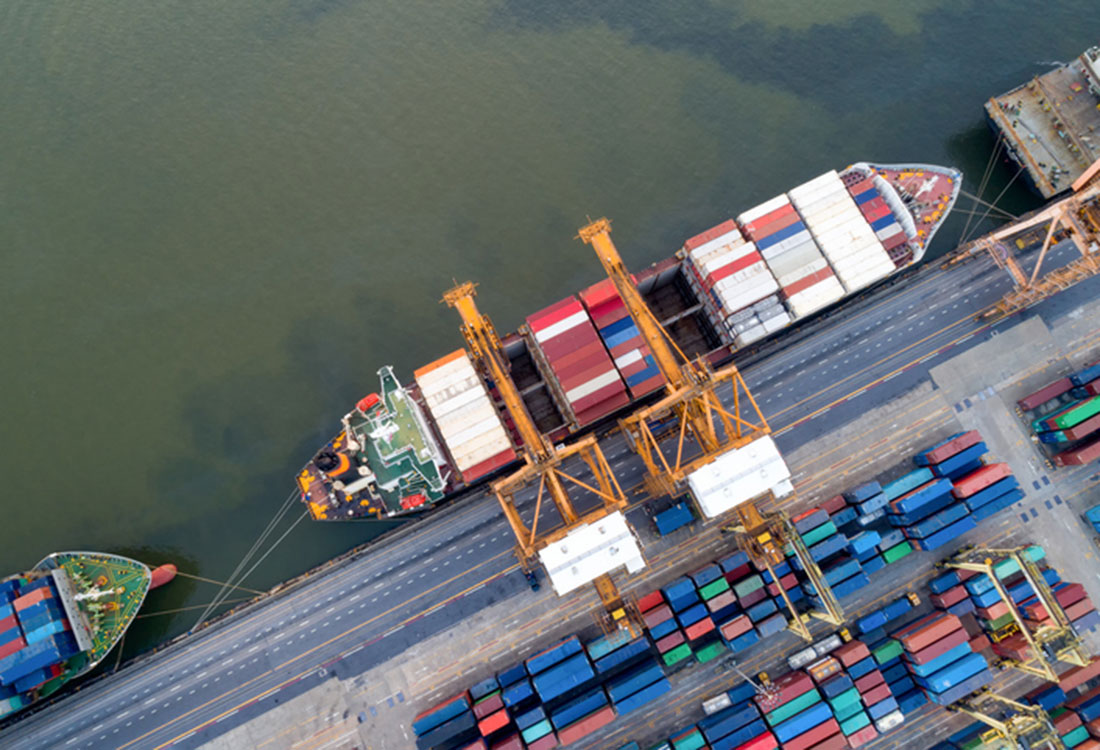
The timing is challenging as importers work to move cargo ahead of China’s National Day holiday, commonly known as Golden Week, which runs from October 1, 2026 through October 7, 2026. The compressed shipping window is coinciding with blank sailings and other carrier capacity-management measures designed to limit available space and support rate levels.
Panama Canal Capacity Remains Constrained
The Panama Canal remains an important constraint for Asia–North America East Coast and Gulf Coast services. In response to reduced precipitation and falling water levels in the canal watershed, the Panama Canal Authority has adjusted its transit reservation system and vessel allocation process, while draft restrictions and available transit capacity remain operational concerns.
Reduced daily transit capacity can increase waiting times for vessels without secured reservations. For East Coast importers, that can limit the number of vessels and container slots serving the trade, putting additional pressure on schedules and routing decisions.
A Cautious Return to the Suez Route
After avoiding the Suez Canal for an extended period because of security concerns, several major carriers are beginning to restore services through the Red Sea. If a larger share of Asia–Europe services returns to the Suez route, the change could eventually improve global effective capacity and shorten transit times.
The return remains cautious and dependent on the security environment. Geopolitical risk has not disappeared, and any deterioration in Red Sea security could quickly reverse the trend and force carriers to alter their networks again.
October Outlook Remains Unsettled
U.S. ocean import volumes are forecast to decline slightly in October, which could cause shipping rates to flatten or soften modestly through the month. Carriers are responding by actively implementing blank sailings to manage capacity and defend pricing ahead of fourth-quarter contract negotiations.
There is still potential for a minor rate increase in mid-October or early November if blank sailings during the extended holiday period reduce available capacity more sharply than expected. The broader expectation is that rates will trend downward once port congestion eases and operations return to more normal conditions.
For shippers, the priority will be maintaining flexibility. Monitoring carrier schedules, securing bookings early where possible and keeping alternative routings in view can help reduce the impact of further congestion, capacity reductions or geopolitical disruption.
For more information, contact Monserrat Vazquez, Manager – Freight Solutions or Irina Moskvitina, Team Leader – Freight Pricing.
Global Spotlight Quiz

Name the city with the second largest ice-free natural harbour in the world
- This city was established by the British in 1749.
- The Citadel National Historic Site sits in the heart of downtown. Every day at Noon, the sound of a cannon is set off, a tradition that originated in the mid-1800s as an audible signal for ships, residents and soldiers to reset their clocks and watches.
- One of the cities most beloved parks, Point Pleasant, is being rented from the British Government for 10 cents a year.
- Home to one of the world’s longest boardwalks and the oldest continuously operating salt-water passenger ferry service in North America.
- Has a strong connection to the Titanic – there is a permanent Titanic Museum and the Fairview Lawn Cemetery is the final resting place of over 100 Titanic victims.
- The explosion that occurred in this city in 1917, when a munitions ship collided with another vessel in the harbour, was the largest man-made chemical explosion prior to the atomic bomb.
Answer: Halifax, Nova Scotia

For more information about shipping freight to or from this city, contact Monserrat Vazquez, Manager – Freight Solutions.
Quick Tip
What freight quotation is best for your product?
Don’t sign off on a shipment until you have confirmed the quotation is the right match for your product. For example, a truck shipment from Los Angeles to Toronto could be quoted per pallet, per pound, per mile, or per linear foot of space taken up on the truck.

At Your Service
Nicolas Gomez
Customs Consulting Services (Canada)
Nicolas Gomez joined our Customs Consulting Services team at head office in January 2023. His responsibilities include HS tariff classification, database maintenance, Free Trade Agreement management and other technical Customs issues. Nicolas is consulting on all aspects of the USA/Canada Trade War from a Canadian Customs import perspective.
With strong customer service skills and an eagerness to help guide on compliance needs, Nicolas is consistently ensuring our clients’ needs are met.
Nicolas is currently working at our Fort Erie office and can be reached by phone (905) 882-4880, ext. 2204 or email.

Customs Consulting Services
(Canada)
SMART Logistics
Controlling how freight moves through your supply chain could save you thousands – or more.
Working with us means someone always asks: how can we make this shipment better?
Single-sourced trucking, customs clearance and distribution to expedite your freight shipments between the U.S. and Canada.
Route is produced monthly for the clients of Universal Logistics. Reader comment and story ideas are welcome. Comments of general interest to all Route readers will, with the permission of the writer, be published. Copyright © 2026 Universal Logistics Inc. All rights reserved. Reproduction for any commercial use is strictly prohibited.
Route is produced by Universal Logistics. Editor: Bettina Scharnberg. Email: bscharnberg@universallogistics.ca While every effort has been made to ensure the accuracy of information contained herein, Universal Logistics accepts no responsibility or liability for errors or omissions. Written correspondence should be forwarded to:
Universal Logistics Inc.
125 Commerce Valley Drive West
Suite 750, Thornhill, Ontario L3T 7W4
Tel: 905-882-4880 Fax: 905-882-2250
Attention: Bettina Scharnberg