
US Customs’ IEEPA Tariff Refund Process
US Customs and Border Protection (CBP) have launched their new, Consolidated Administration and Processing of Entries (CAPE) system, which is the dedicated platform for processing International Emergency Economic Powers Act (IEEPA) tariff refunds. Key features include:
- Importers and their brokers will be able to upload a CSV file listing the entries for which IEEPA refunds are being requested.
- CAPE will validate the CSV file against Automated Commercial Environment (ACE) and the relevant entry data.
- Refund amounts will be calculated as the IEEPA duty paid, less the applicable Chapter 1–97 duty that would otherwise be owed.

- Upon review, CAPE will initiate liquidation or reliquidation for the listed entries and will automatically set liquidation/reliquidation dates based on the date the CAPE declaration is accepted.
- CBP will retain a review period between acceptance of the CAPE declaration and the new liquidation date to manually review entries as required.
CAPE is being released in phases, with components made available to the public as they are completed:
CAPE Phase I
In CAPE Phase I, CBP will process IEEPA tariff refunds only for unliquidated entries and liquidated entries for which CBP’s 90-day voluntary reliquidation period has not expired. Upon completed processing, CBP will issue a refund, including interest (currently at a rate of 7% per annum), within an estimated 60-90 day processing time.
Future CAPE Phases
CBP has not yet identified how it will process IEEPA tariff refunds for entries that do not fall within the parameters of CAPE Phase I (e.g. entries covered by an open protest, flagged for reconciliation, subject to a drawback claim, and those entries for which liquidation is final.)
More information will be provided as it becomes available
To be eligible to use CAPE, the following prerequisites apply:
- Importer of Record (IOR) or authorized customs broker must have an established ACE Portal account
- As CBP are significantly backlogged setting up ACE access, where clients of Universal Logistics USA do not have an established ACE Portal Account, Universal can submit the IEEPA refunds through our ACE account to avoid refund processing delays
- Refund recipients must use the ACE Portal account to provide CBP with bank account information for refunds.
- Refunds will be paid electronically by Automated Clearing House (ACH), and recipients must have US bank account information designated for refunds on file with CBP.
- If you do not have a US bank, Universal can act as your “Notify Party” – refunds will be directed to Universal and forwarded to you. If you cannot designate Universal as the Notify Party through the ACE portal, you can submit CBP Form 4811 in lieu of filing through the portal – Universal will file the 4811 with CBP on your behalf.
More information about how to register for electronic refunds is available in CBP Guidance (CSMS # 67644085).
How Universal Logistics Can Help
We are available to assist you with:
- Setting up or verifying your ACE Portal account and Top Account access
- Enrolling in or updating your ACH Refund Program details
- Acting as the Notify Party for importers without a US bank
- Reviewing your entry data to identify and quantify potential IEEPA refunds, along with
- Preparing and submitting refund entries via CAPE
For more information, contact Matthew Williamson, Consultant – Trade Advisory, Universal Logistics USA.

Air with Care: Transporting human remains with the care and expertise families deserve
For funeral homes, the transportation of human remains requires more than logistics; it requires discretion, expertise, and a team that understands the sensitivity of every shipment.
Air with Care, offered exclusively by Universal Logistics, is a specialized airfreight service designed specifically for funeral homes handling domestic and international transportation of human remains.
A dedicated team of logistics specialists manages every step of the process, including documentation, route selection, airline compliance, ground transfers, and flight tracking, so you can focus on supporting the families you serve.
Key advantages include personal and professional communication with the Funeral Director on each shipment, selection of the most direct routing to avoid transshipment delays, and after-hours service available on request. To learn more about Air with Care, contact Veena Ramesh, Manager – Airfreight Services.
Section 232: Strengthened US Tariffs on Steel, Aluminum & Copper
On April 2, 2026, US President Donald Trump issued a Proclamation under Section 232 imposing 10–50% additional duties on the full customs value of steel, aluminum, and copper articles — including derivatives — from all countries, including 0% on certain motorcycle parts. This replaces the previous metal content reporting method with an all-in valuation approach.
Section 232 is now a four-tier structure, with different rates applicable to metal articles and their derivatives. The applicable tier is determined by HS tariff classification of the imported article. If a product is listed as an article/derivative of more than one metal (e.g., steel and aluminum), it will be subject only once to the higher applicable duty rate — there is no stacking of multiple Section 232 charges for multiple covered metals.

A new four-tier Section 232 tariff structure has been introduced
Annex I-A – 50% (HS 9903.82.02) Steel, aluminum or copper subject to 50% duty on the full value of the imported article.
Forty-five new codes have been added, covering wire and cable, wire rod, bar and tube across metals.
This Annex includes HTS codes primarily found in Chapters 72-74 and 76.
Annex I-B – 25% (HS 9903.82.06, 9903.82.09) covers new Derivatives product list. This duty, previously 50% on the metal content value, now applies to the full customs value of the import, rather than just the metal content, at a rate of 25%.
Annex II – (HS 9903.82.03) lists 247 HS codes that have been removed from the derivatives products list as they contain less than 15% metal content.
Annex III – 15% (HS 9903.82.10, 9903.82.11) Certain metal-intensive industrial equipment and electrical grid equipment are subject to a temporary reduced 15% tariff-rate “cap.” If the product’s general (Column 1) duty rate is less than 15%, then the Section 232 rate will be the difference. If a product’s existing Column 1 rate is already at or above 15%, no additional Section 232 duty applies.
- On January 1, 2028, Annex III products will transition to the 25% rate applicable under Annex I‑B.
Annex IV (de minimis exemption) – Articles that are found in Annex I-B (25% rate) and III (15% “cap”) and are outside Chapters 72, 73, 74, or 76 whose weight of applicable metals is below 15% of the total weight of the imported article are excluded from those tariff rates.
Additional measures:
USA Origin Metal – 15% (HS 9903.82.06, 9903.82.07, 9903.82.08) Certain Derivative goods where at least 95 percent of the metal content of the article must be composed of aluminum or copper that was smelted and cast in the United States, steel that was melted or poured in the United States
UK Origin Metal – 25% (HS 9903.82.04) Where 95% or more of the steel was melted and poured or aluminum was smelted and cast in the UK
UK Origin Metal – 15% (HS 9903.82.04) Applicable to Annex I-B Derivative goods, where 95% or more of the steel was melted and poured or aluminum was smelted and cast in the UK
Russia – Steel and Copper – 50% (HS 9903.82.14, 9903.82.15, 9903.82.16 and 9903.82.17) covers articles of steel, copper or their derivative products that are the product of the Russian Federation
Russia – Aluminum – 200% (HS 9903.85.67, 9903.85.68) covers all Russian Federation origin aluminum articles and their derivatives
Motorcycle Parts – 0% (HS 9903.82.13) – provides relief of Section 232 duty where goods classifiable in Chapters 84, 85 or 87 are used in the manufacturing of motorcycles in the USA
Please refer to US Customs and Border Protection (CBP) CBP Guidance. A complete breakdown by HS tariff classification may be found in the Annexes. These new measures took effect on April 6, 2026.
For more information, contact Matthew Williamson, Consultant – Trade Advisory, Universal Logistics USA.
Fuel surcharges on the rise across all modes of transport
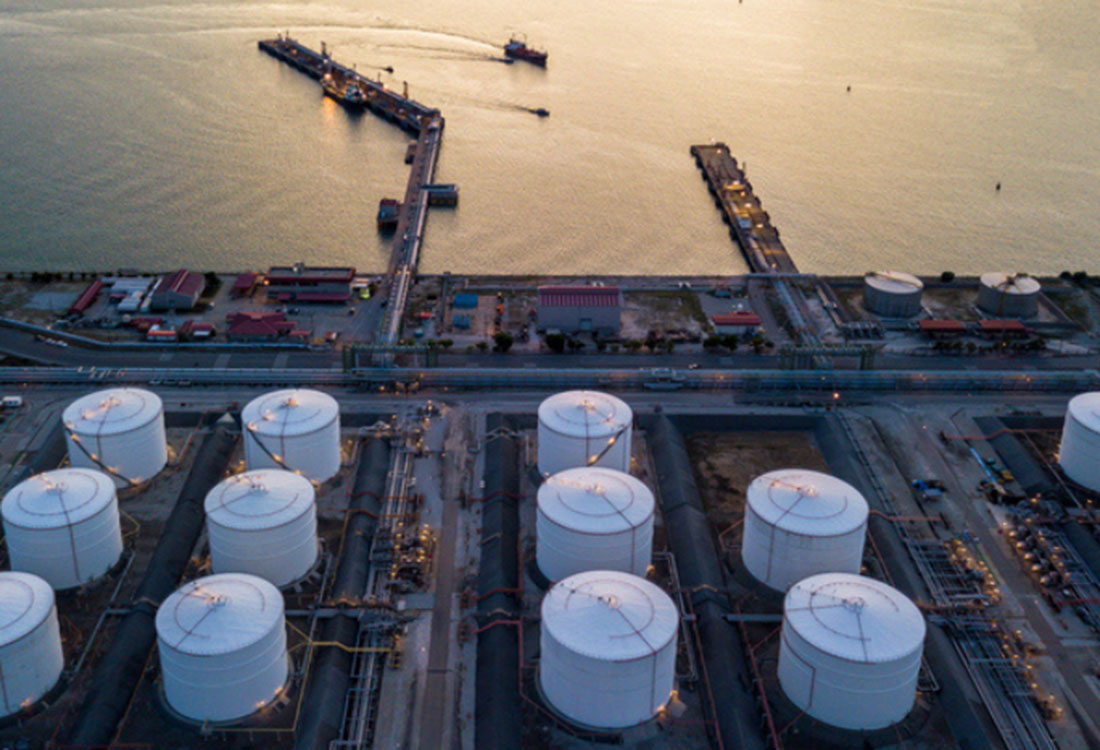
Fuel costs continue to put upward pressure on freight rates, and the impact is being felt across ocean, air, and trucking. Here’s what to expect:
Ocean freight carriers are increasingly applying Emergency Fuel Surcharges (EFS) on top of standard bunker charges, rather than adjusting base rates. This approach is driving less predictability in total landed costs and contributing to greater volatility in freight quotes due to more frequent adjustments.
Airfreight is the most sensitive to fuel fluctuations. Airlines are frequently adjusting surcharges, sometimes bi-weekly, while also cutting capacity, leading to higher per-kilogram costs and tighter space availability.
For truck freight, fuel surcharges are being added as a percentage of the line-haul charge, contributing to week-to-week rate volatility and reduced capacity on some lanes.
To manage the impact, consider booking shipments earlier, consolidating where possible, using quotes within their validity window, and building flexibility into your freight budget.
For more information, contact Irina Moskvitina, Team Leader – Freight Pricing or Melanie Basu, Truck Services.
What you don't see in CARM could cost you
The Canada Border Services Agency (CBSA) now communicates directly with importers through the CARM Client Portal (CCP), and many of those notifications carry strict compliance deadlines. Critically, CBSA treats a notification as official communication whether it has been viewed or not — missed alerts don’t create an extension, they create exposure.
Make sure you are regularly monitoring:
- Portal alerts and notifications
- Monthly Statements of Account (SOA)
- Financial security for Release Prior to Payment (RPP)
- User access and roles to ensure the right people are receiving CBSA communications
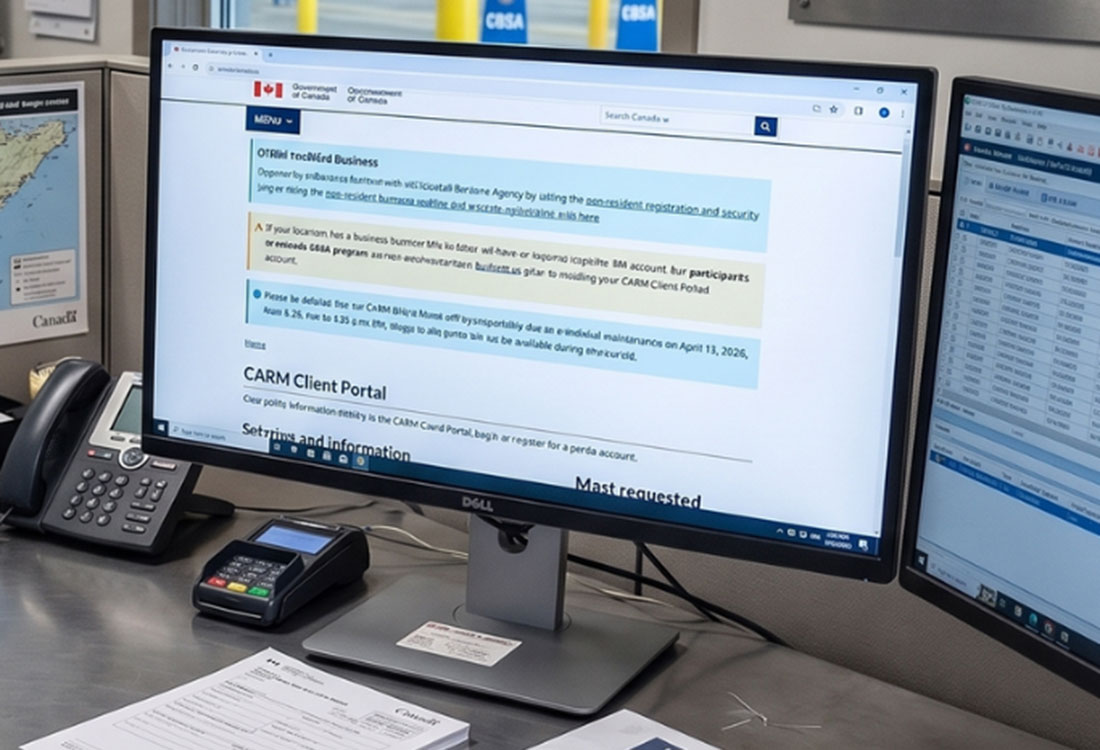
Falling behind can result in missed deadlines, Administrative Monetary Penalties (AMPS), or loss of RPP privileges — all of which can disrupt your shipments and increase costs.
If you have questions about your CARM account or need help navigating the CCP, contact your Client Care Representative.
Global Spotlight Quiz

Name the city that hosted the 2010 FIFA World Cup final
- Sitting at approximately 1,753 meters (5,571 feet) above sea level, this city is notably higher than Denver, Colorado, which calls itself the ‘Mile High City’.
- The city was founded by a 19th-century gold rush and has earned the title ‘City of Gold’.
- Has the country’s largest dry port, functioning as a vital inland container terminal.
- Home to one of the world’s most thrilling rides, the Tower of Terror at Gold Reef City.
- Home to almost half the world’s human ancestor fossils as well as the world’s largest man-made forest.

For more information about shipping freight to or from this city, contact Monserrat Vazquez, Manager – Freight Solutions.
Quick Tip
How to avoid customs penalties for non-compliance
Sooner or later, your business will be audited by Customs and Border Protection (CBSA) to ensure you have not committed violations subject to AMPS (Administrative Monetary Penalties System) penalties.
Make sure you are ready by:

- maintaining a documented paper trail of every import/export shipment from purchase order to delivery
- ensuring all customs declarations, generated from information on the shipping documents, mirror your internal ledgers (i.e. your reporting to Customs must reflect commercial reality)
- keeping all records relating to customs transactions for the prescribed time limits (six years plus the current year)
We offer professional customs consulting services to help you achieve full compliance. Remember, investing in compliance is always less costly than paying for non-compliance.
At Your Service
Airfreight Services
Meet the key members of Universal’s Airfreight Services team, Veena Ramesh, Manager – Airfreight Services, and Jikku Viju, Airfreight Services, who are based at our Toronto Airport office. Veena and Jikku are your go-to experts for all aspects of airfreight, including the transport of human remains through our Air with Care program, offered exclusively by Universal Logistics.
Veena joined our Airfreight Services team in August 2014 and, in her current role, continues to focus on the growth and development of our air import and export services, ensuring our clients’ needs are fully met. Veena has excelled in all aspects of this role due to her extensive knowledge of import and export airfreight, while providing top-level service to our clients.
Jikku joined Universal Logistics in November 2022 and, in his present role, coordinates both air import and export shipments. Jikku is detail-oriented and has excellent customer service skills, which are essential when handling time-sensitive airfreight. He ensures that our clients are up to date on their shipments at all times and that freight moves in a timely manner, making Jikku a great asset to our team.
For more information on our Airfreight service, contact Veena Ramesh or Jikku Viju.

SMART Logistics
Controlling how freight moves through your supply chain could save you thousands – or more.
Working with us means someone always asks: how can we make this shipment better?
Single-sourced trucking, customs clearance and distribution to expedite your freight shipments between the U.S. and Canada.
Route is produced monthly for the clients of Universal Logistics. Reader comment and story ideas are welcome. Comments of general interest to all Route readers will, with the permission of the writer, be published. Copyright © 2026 Universal Logistics Inc. All rights reserved. Reproduction for any commercial use is strictly prohibited.
Route is produced by Universal Logistics. Editor: Bettina Scharnberg. Email: bscharnberg@universallogistics.ca While every effort has been made to ensure the accuracy of information contained herein, Universal Logistics accepts no responsibility or liability for errors or omissions. Written correspondence should be forwarded to:
Universal Logistics Inc.
125 Commerce Valley Drive West
Suite 750, Thornhill, Ontario L3T 7W4
Tel: 905-882-4880 Fax: 905-882-2250
Attention: Bettina Scharnberg