
Beyond Movement: Why Expert Logistics Partnership Is Your Strategic Advantage in 2026
In today’s increasingly complex global trade environment, the importance of working with a competent, locally established freight forwarder cannot be overstated. A trusted freight partner does far more than move cargo from point A to point B – they protect your business from costly delays, compliance risks, and hidden expenses that can quickly erode margins.
Relying solely on an overseas shipper or a non-resident freight forwarder may seem convenient, but it often exposes importers to unnecessary risk. Local import regulations in both the U.S. and Canada are highly detailed and continuously evolving. Without in-depth, on-the-ground knowledge of these requirements, shipments can – and frequently do – run into serious issues upon arrival.

Where Problems Commonly Begin
It is not uncommon for shipments arranged by overseas parties to arrive without proper compliance with mandatory import data filings such as ISF requirements in the U.S. or eManifest requirements in Canada. When this happens, cargo may be held at the port of entry, delayed indefinitely, or subject to enforcement action.
In more severe cases, authorities such as U.S. Customs and Border Protection (USCBP) or the Canada Border Services Agency (CBSA) can issue significant monetary penalties. In extreme situations, shipments may be refused entry altogether and forced to be re-exported – often at the importer’s expense, despite the importer having had little or no involvement in arranging the shipment.
Even when issues are resolvable, cargo is frequently held at bonded or arrival warehouses while documentation or compliance gaps are addressed. This can lead to substantial daily storage charges and operational disruption, especially for businesses operating with tight timelines or lean inventory models.
The Cost of Limited Control
When compliance issues arise under these scenarios, importers are often left scrambling for solutions. The parties responsible for correcting the problem – the shipper or overseas forwarder – are based outside North America and may have a limited understanding of U.S. or Canadian regulations. As a result, the burden shifts to the importer, who may also lack the expertise required to resolve the issue efficiently.
At the same time, importers who allow freight costs to be bundled into the purchase price of goods often have little visibility or control over pricing, making it difficult to manage landed costs or identify inefficiencies. What appears simple on paper can quickly become expensive in practice.
The Universal Logistics Advantage
By working with an established, local freight forwarder like Universal Logistics, importers gain control, clarity, and confidence across their supply chain.
Our team understands the regulatory landscape in both Canada and the U.S. and ensures shipments are structured correctly from the outset – reducing the risk of delays, penalties, and avoidable fees. We act as an extension of your business, coordinating shipments, managing compliance requirements, and proactively addressing potential issues before they impact your operations.
We have seen firsthand how preventable mistakes – often made due to lack of local expertise – can disrupt supply chains and strain budgets. Partnering with Universal Logistics helps ensure your cargo moves smoothly, your costs remain transparent, and your business stays focused on growth rather than damage control.
A Smarter Way to Move Freight
Controlling your freight isn’t just about transportation – it’s about protecting your business. With Universal Logistics, you gain a knowledgeable partner who brings experience, accountability, and strategic insight to every shipment.
In an environment where margins matter and compliance is non-negotiable, working with the right freight forwarder makes all the difference.
For more information, contact Debbie McGuire, Director – Freight Solutions.
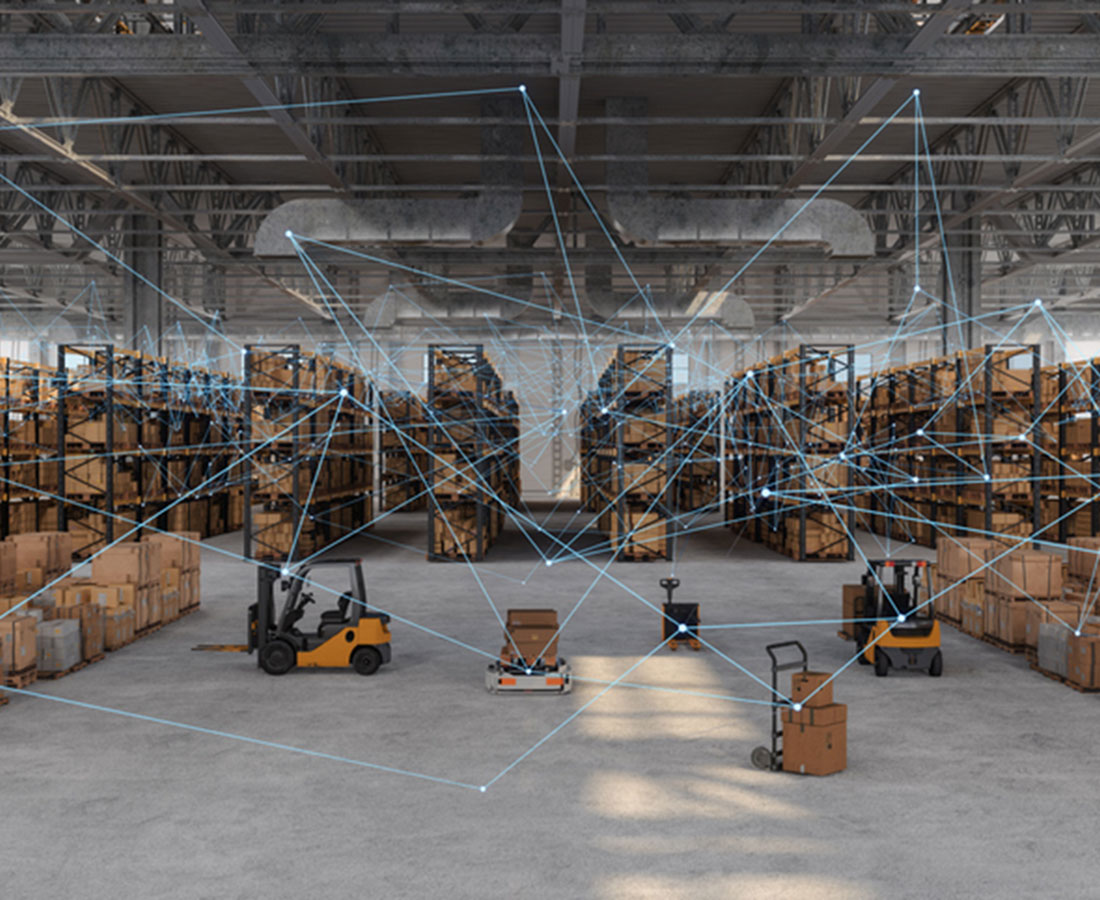
Streamlined Warehousing and Distribution Solutions for a Smarter Supply Chain
Key features include:
- Web Viewer Access – Real-time visibility into inventory, orders and shipments.
- Enhanced Pick/Pack/Shipping Operations – Outfitted packing for glass, electronics and other fragile & sensitive products.
- Optimized Shipment Tracking – Every movement of a product can be monitored – from warehouse to final delivery.
- Cross-Dock Capabilities – Optimized handling for time-sensitive shipments, reducing storage needs and speeding delivery.
Canada Implements 25% Global Surtax on Steel Derivatives
Further to Prime Minister Mark Carney’s recently announced new trade measures for Canada’s steel industries, as reported in our December issue of Route, this 25 percent Steel Derivative surtax has been detailed in Canada Border Services Agency (CBSA) Customs Notice 25-33: Steel Derivative Goods Surtax Order.
Effective December 26, 2025, certain steel derivative goods imported into Canada are subject to a surtax in the amount of 25 percent on the full declared value for goods listed in the Schedule to the Steel Derivative Goods Surtax Order.
The surtax will apply to steel derivative goods imported into Canada, for commercial purposes, from all countries of origin.
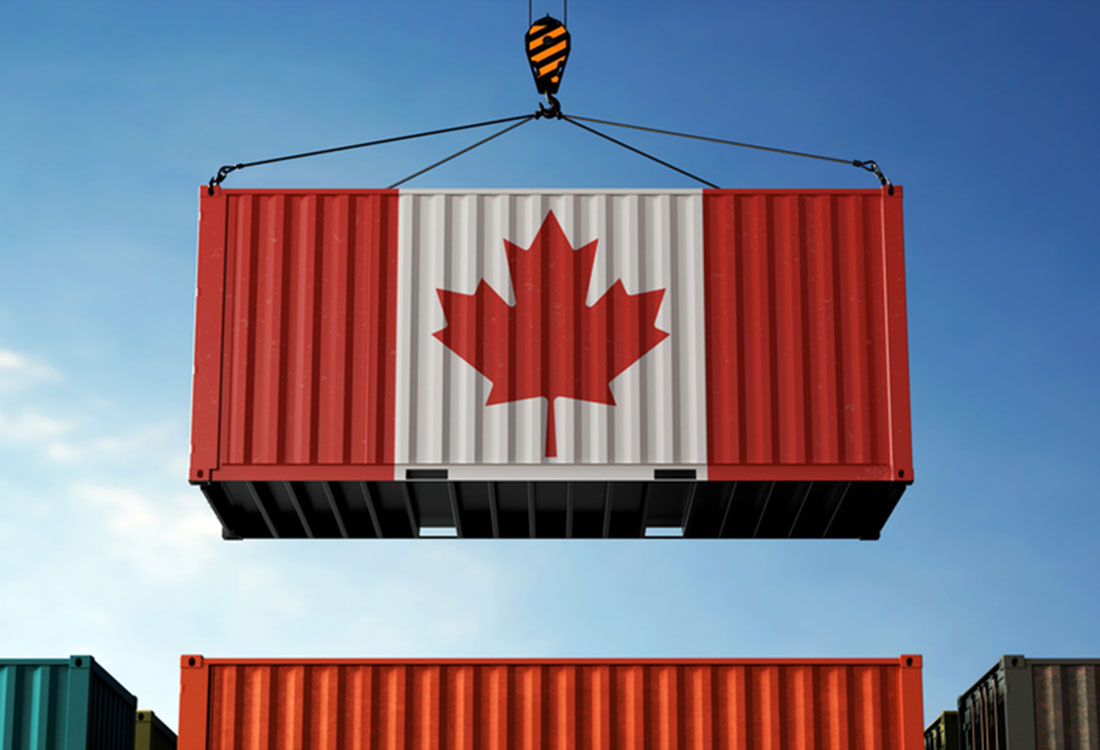
Canada maintains a non-stackable policy for its surtaxes on steel. Only one of these measures can apply to a particular good, following this order of precedence:
- Surtax on steel imports over the established tariff rate quotas for non-CUSMA countries
- Either: a) surtax on U.S. steel products; b) surtax on Chinese steel products; or c) surtax on non-U.S. imports that contain steel melted and poured in China
- Surtax on steel derivative products from all countries
Exceptions to the surtax
The surtax will not apply to steel derivative goods that are in transit to Canada on the date on which the surtax comes into force. This includes goods that were in transit before the surtax comes into force. For the purpose of this Customs Notice, ‘in transit to Canada’ refers to goods bound for but not yet arrived in Canada, and under the control of a carrier. Importers must have proof in their possession that such goods were in transit to Canada in order to demonstrate that the surtax is not applicable. Such proof may include the following documentation: shipping documents (for example, a bill of lading), report of entry documents, and cargo control documents. Such proof may be requested at any time by a CBSA officer.
Steel derivative goods that are subject to a surtax under the China Surtax Order (2024), the United States Surtax Order (Steel and Aluminum 2025), the Order Imposing a Surtax on the Importation of Certain Steel Goods or the Steel Goods and Aluminum Goods Surtax Order are not subject to the surtax.
Casual goods as defined in section 2 of the Persons Authorized to Account for Casual Goods Regulations (SOR/95-418) are not subject to the surtax.
Steel derivative goods that are classified under a tariff item of Chapter 98 of the Schedule to Canada’s Customs Tariff, even if the goods are otherwise classifiable under a tariff item set out in the Schedule to the Steel Derivative Goods Surtax Order, are not subject to the surtax.
Steel derivative goods that are imported before July 1, 2026 for use in the manufacture of motor vehicles or chassis for motor vehicles or in the manufacture of parts of or accessories for motor vehicles or chassis for motor vehicles are not subject to the surtax.
Steel derivative goods that are imported before July 1, 2026 for use in aircraft, ground flying trainers or spacecraft or in parts of aircraft, ground flying trainers or spacecraft are not subject to the surtax.
Utility wind towers, and sections of those towers, that are classified under tariff item 7308.20.00 and are imported for installation in energy projects located west of the Ontario–Manitoba border are not subject to the surtax.
For subject goods imported into Canada and subsequently re-exported Canada’s Duties Relief and Duty Drawback Programs will be available to importers for surtax paid or owed by Canadian businesses, subject to the provisions of the Canada-United States-Mexico Agreement (CUSMA). When goods are of CUSMA (US/Mexico) origin, the goods are not subject to the limitations of CUSMA and the “lesser of two duties” determination does not apply. Therefore, in these circumstances, the goods may be eligible for full relief, if the CUSMA criteria is met, as outlined in CBSA’s Memorandum D7-4-3: CUSMA Requirements for the Duty Drawback and the Duties Relief Programs.
For more information, contact Brian Rowe, Director – Customs Compliance & Regulatory Affairs.
US Trade Deficit Narrowed to 2009 Levels in Late 2025
The US trade deficit dropped sharply in late 2025, reaching its lowest level since 2009, as import volume decreased under President Trump’s sweeping tariffs, according to new government data.
The overall trade gap plunged 39% to $29.4 billion in October, as imports fell by 3.2%, Department of Commerce figures show. The deficit was significantly lower than the $58.4 billion median forecast from surveys of economists by Dow Jones Newswires and The Wall Street Journal.
While US exports rose by $7.8 billion to $302 billion in October, imports dropped by $11 billion to $331.4 billion. The US trade deficit in September was $48.1 billion.

The figures underscore how Presidents Trump’s volatile and sweeping tariff policies have influenced trade flows. When the president unveiled wide-ranging tariffs on imports from dozens of trading partners, US businesses rushed to stock up on inventory, front-loading imports ahead of planned tariff hikes. This has allowed many companies to avoid passing on the full cost of tariffs to consumers, keeping price hikes on goods relatively tame.
However as of mid-November, it is estimated that US importers face an overall average effective tariff rate topping 16%, the highest since the 1930s and based on recent trade data, this is clearly influencing importers purchasing decisions.
One of the key reasons the US trade deficit dropped to such an extent was exports from China to the U.S. dropped by 20% in 2025. Despite this massive drop, China’s trade surplus surged to a record of almost $1.2 trillion in 2025, as exports rose 5.5% in 2025 to almost $3.77 trillion. While exports to the U.S. are on a downward trend, Chinese exports to Africa surged 26%, those to Southeast Asia grew by 13%, to the European Union by 8% and to Latin America by 7%.
For more information, contact David Lychek, Director – Ocean & Air Services.
CBSA Increases Marine Container Examinations at Major Ports
Canadian ports are seeing a noticeable shift in how marine shipments are being reviewed – and importers should be prepared for the operational impact.
The Canada Border Services Agency (CBSA) has increased enforcement activity at major marine terminals, resulting in higher container examination rates. For shippers relying on ocean freight to Canada, this has led to longer release times and a greater risk of unexpected delays.
What’s Driving the Change
CBSA’s heightened scrutiny is tied to a rise in identified risk factors, including tariff misclassification, country-of-origin concerns, undeclared goods, and potential contraband.
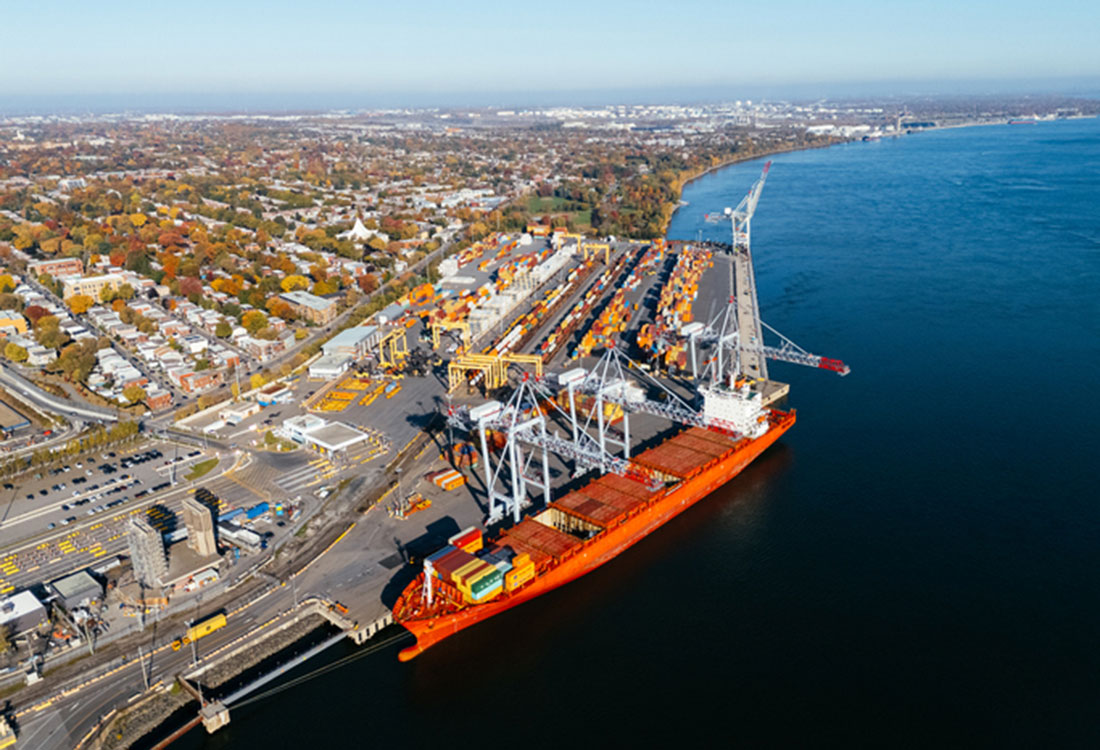
In response, officers are applying more rigorous screening measures and expanding the use of targeted examinations on inbound containers.
While these efforts are aimed at strengthening border controls, the downstream effects are being felt across supply chains – particularly in time-sensitive or lean-inventory operations.
What Importers Should Expect
When a container is selected for examination, delays of two to three weeks are increasingly common. These timelines reflect the depth of the review process rather than isolated administrative slowdowns.
Planning for a Tighter Environment
In today’s fluid trade environment, increased inspection activity is likely to remain a reality. Importers can reduce disruption by taking a more proactive and resilient approach to planning:
- Strengthen documentation – Ensure tariff classifications, origin details, and commercial invoices are consistently accurate.
- Communicate early – If a shipment is placed on hold, early engagement with your logistics and customs partners helps maintain visibility and momentum.
- Build buffer where possible – Modest increases in safety stock or lead time can help offset unpredictable release delays.
- Diversify routing strategies – Evaluating alternate carriers or ports can reduce reliance on a single lane or terminal.
The Universal Logistics Perspective
At Universal Logistics, we’re seeing firsthand how increased CBSA scrutiny is reshaping marine import timelines. While inspections are beyond shippers’ control, preparation and transparency can make a meaningful difference in minimizing downstream impact.
Our team continues to monitor enforcement trends closely and work with clients to plan around evolving border requirements – so delays don’t turn into larger disruptions.
For more information, contact David Lychek, Director – Ocean & Air Services.
CBSA Updates Trade Compliance Verification Priorities for 2026
The January 2026 list of verification priorities for the Canada Border Services Agency (CBSA) has been released.
Compliance priorities:
The CBSA has identified the following compliance priorities:
- Tariff rate quota and classification of supply managed goods
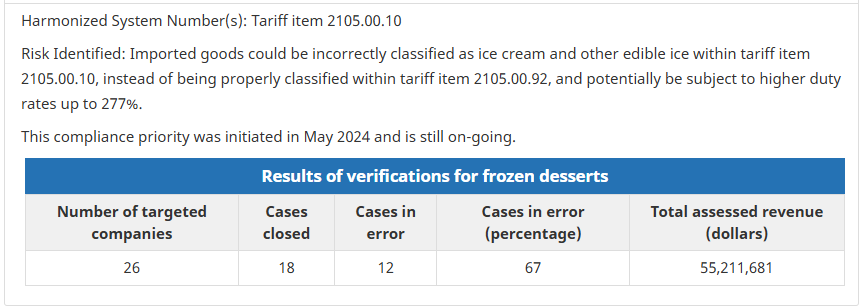
- Verifications on the classification of frozen desserts containing 5% of dairy products
- Verifications on the classification of cheese treats for dogs (preparations of a kind used in animal feeding under heading 23.09)
- Verifications on the classification of spent fowl products
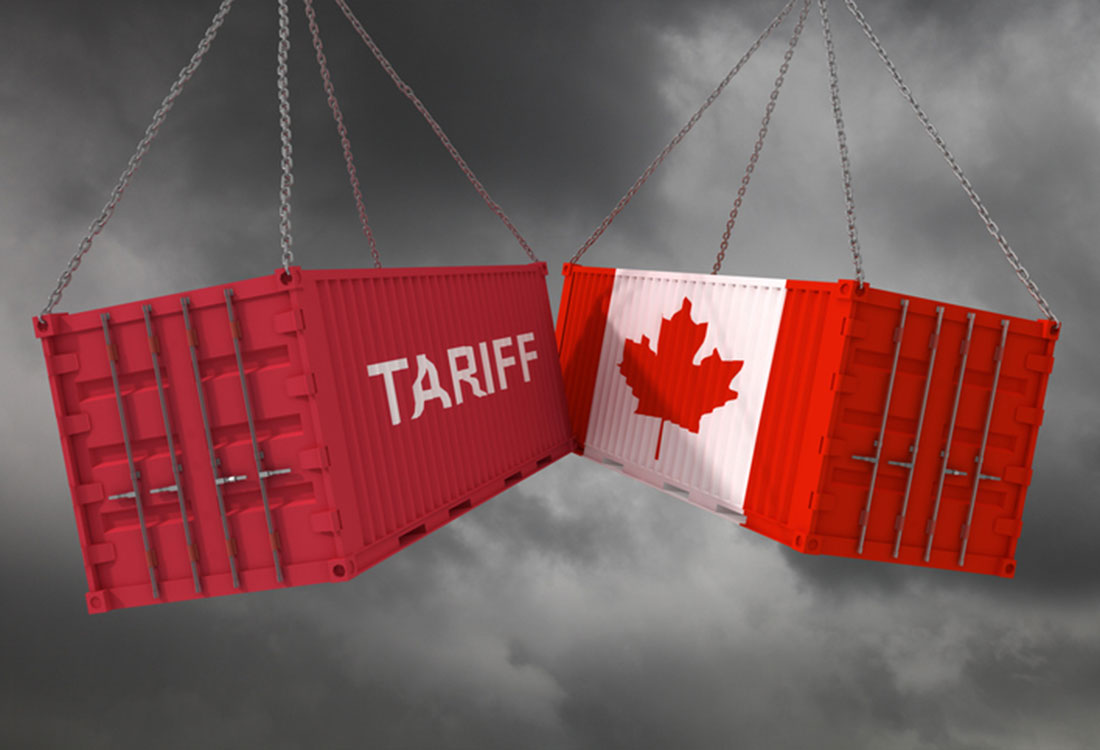
- GST and excise duties and taxes
- GST exemption codes
- Vaping products subject to excise duties and taxes
- Precious metals
- Canada-United States-Mexico Agreement (CUSMA) origin verifications:
- Automotive industry
- Import origin verifications under:
- Canada-European Union Comprehensive Economic and Trade Agreement (CETA)
- Canada-United Kingdom Trade Continuity Agreement (CUKTCA)
- Duties Relief Program (DRP)
- Verifications of licensees importing supply managed goods
- China Surtax Order (2024): Electric vehicles
- China Surtax Order (2024): Steel and Aluminum
- United States Surtax Order (2025-01)
- United States Surtax Order (Steel and Aluminum 2025)
- United States Surtax Order (Motor Vehicles 2025)
- Order imposing a Surtax on the importation of Certain Steel Goods
- Steel Goods and Aluminum Goods Surtax Order
- Energy commodities and final accounting
- Verifications on electricity imports under chapter 27 of the Customs Tariff
The current tariff classification verification and compliance priorities are:
Frozen desserts – Harmonized System Number(s): Tariff item 2105.00.10
- China Surtax Order (2024): Electric vehicles
- China Surtax Order (2024): Steel and aluminum
- United States Surtax Order (2025-1)
- United States Surtax Order (Steel and Aluminum 2025)
The list is also made up of additional rounds for items that have appeared on previous lists:
- Gloves – Round 3 – Harmonized System Number(s): Headings 39.26 and 42.03
- Bags – Round 3 – Harmonized System Number(s): Heading 42.02
- LED Lamps – Round 2 – Harmonized System Number(s): Heading 85.39
- Spent Fowl – Harmonized System Number(s): Headings 02.07, 16.01 and 16.02
CBSA also maintains a historical verification priorities list, which should be reviewed by all importers as they will likely circle back to these reviews in order to ensure compliance.
CBSA sets verification priorities through a continuous, risk-based process. New priorities may be added during the year, and CBSA may revise these priorities at any time as risk conditions change.
For more information, contact Brian Rowe, Director – Customs Compliance & Regulatory Affairs.
Global Spotlight Quiz

Name a U.S. City with a High Density of High-Profile Residents
- Famous residents include Michael Phelps, Babe Ruth, Edgar Allen Poe, Thurgood Marshall, Billie Holiday and many others.
- Home to Fort McHenry, the birthplace of the American national anthem.
- Snowballs (aka snow cones) were invented here during the Industrial Revolution.
- The first telegraph line in the world was established in this city in 1844.
- A catastrophic fire struck the city in 1904, burning for 30 hours, destroying 1,500 buildings and leveling entire neighbourhoods.

For more information about shipping freight to or from this city, contact Monserrat Vazquez, Manager – Freight Solutions.
Quick Tip
Optimize Receiving Efficiency: Ensure Adequate Warehouse Staffing for Immediate Shipment Processing
Once advised your shipment is available for local delivery, take delivery at the earliest opportunity. The longer your cargo sits on a pier, at a terminal or warehouse, the more likely it is to be pilfered, lost, stolen or damaged. Help to minimize your risk of problem shipments.

At Your Service
Ali Kay Webber
US Customs Operations
Ali Kay Webber joined Universal Logistics USA in November 2022, working at our Buffalo, NY office, where she is responsible for handling cross-border clearances from 8:30 am – 4:30 pm.
Ali has extensive knowledge of handling customs clearances at all ports across the U.S..
Ali can be reached by phone (716) 882-4100, ext. 2608 or by email.

US Customs Operations
SMART Logistics
Controlling how freight moves through your supply chain could save you thousands – or more.
Working with us means someone always asks: how can we make this shipment better?
Single-sourced trucking, customs clearance and distribution to expedite your freight shipments between the U.S. and Canada.
Route is produced monthly for the clients of Universal Logistics. Reader comment and story ideas are welcome. Comments of general interest to all Route readers will, with the permission of the writer, be published. Copyright © 2026 Universal Logistics Inc. All rights reserved. Reproduction for any commercial use is strictly prohibited.
Route is produced by Universal Logistics. Editor: Bettina Scharnberg. Email: bscharnberg@universallogistics.ca While every effort has been made to ensure the accuracy of information contained herein, Universal Logistics accepts no responsibility or liability for errors or omissions. Written correspondence should be forwarded to:
Universal Logistics Inc.
125 Commerce Valley Drive West
Suite 750, Thornhill, Ontario L3T 7W4
Tel: 905-882-4880 Fax: 905-882-2250
Attention: Bettina Scharnberg