
U.S. Announces Updates to 50% Section 338 Tariffs on Certain Canadian Goods
On October 23, 2026, US President Donald Trump signed a proclamation under Section 338 of the Tariff Act of 1930, modifying the scope of the existing additional 50 percent ad valorem duty on certain products of Canada entering the United States. The product additions and removals take effect at 12:01 a.m. Eastern Time on October 30, 2026.
Section 338 allows the President to impose additional duties of up to 50 percent to offset discrimination against US commerce by a foreign country.
The October 23 proclamation changes product coverage under the measures previously announced in July and modified in September.
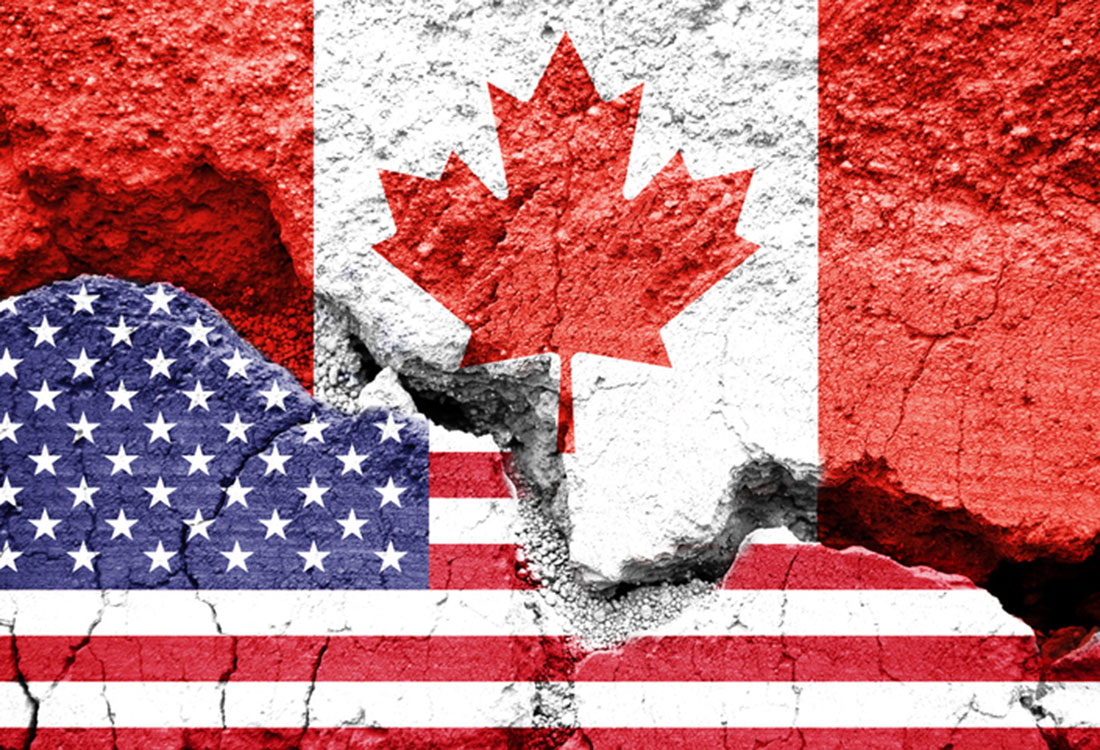
Changes to certain Section 338 Tariffs
- Further Modifying the Scope of Products of Canada Subject to the Additional Duties Imposed to Offset Canadian Discrimination Against the Commerce of the United States with Respect to Motor Vehicles For goods entered for consumption, or withdrawn from warehouse for consumption, on or after 12:01 a.m. Eastern Time on October 30, 2026, the revised product coverage applies. Products removed from the 50% duty are listed in Part A and products added are listed in Part B of Annex I. The corresponding amendments to the Harmonized Tariff Schedule of the United States are set out in Annex II.
Importers should take note – where the 50 percent tariff applies, CUSMA/USMCA does not shield covered goods.
The White House Fact Sheet confirms that Section 338 duties apply to all covered goods made in Canada, regardless of whether the goods originate under CUSMA/USMCA. The Section 338 duties also apply in addition to applicable Section 232 duties. A CUSMA/USMCA certificate of origin will not exempt a listed product here.
If you are unsure whether your products are covered by the updated annexes, our US Customs Consulting Services regulatory team can help you determine their classifications. Reach out to Brian Rowe, Director – Customs Compliance & Regulatory Affairs, or your Client Relations Representative.
One Shipment. One Coordinated Plan.
Every international shipment has several moving parts: the freight booking, the paperwork, customs clearance and final delivery. Split those across separate service providers, and you may find yourself becoming the coordinator, relaying details between companies and following up to ensure everyone has the information they need to keep the freight moving.
Universal Logistics brings it all under one roof
As an international freight forwarder and Canadian and U.S. customs broker, we can coordinate your ocean freight, customs clearance and inland transportation under one plan.
Our Freight Solutions team works with our overseas partners and internal specialists to ensure a seamless connection for each stage of the shipment – from cargo readiness to delivery at your facility.
By involving Universal early, we can review your shipping terms, cargo details and required delivery date, then help plan suitable routing and clarify responsibilities before the shipment moves.
For your business, this means:
- Less coordination: Reduce time spent communicating with multiple service providers.
- Better visibility: Receive updates that cover the shipment’s full journey.
- Earlier preparation: Documents and clearance requirements are addressed before arrival.
- Connected delivery planning: Inland transportation is planned around cargo availability and your receiving schedule.
Using Universal for customs clearance? Let us arrange your freight as well!
Using Universal for ocean freight? Ask us about adding customs clearance and final delivery!
Starting to plan your year-end shipments and freight for 2027? Contact our Freight Solutions team to discuss how Universal can bring your next shipment together under one coordinated plan.
Anti-Dumping Duties in Canada and the U.S.: How to Tell If Your Goods Are Subject
Anti-dumping and countervailing duties are charged on top of regular customs duties, and in both Canada and the United States, the importer pays them. They apply to specific products from specific countries; the rates can be steep, and they can be reassessed after the goods are sold. Knowing whether your goods fall under an active measure is part of landed cost planning, not something to discover at the border.
What is dumping?
Dumping is when an exporter sells goods in a foreign market for less than it charges at home, or for less than it costs to make them. Subsidizing occurs when a foreign government provides an exporter with financial support that allows it to sell below fair market prices. Both hurt producers in the importing country through lost sales, lower profits and job losses.
Two World Trade Organization agreements cover this: the Anti-Dumping Agreement and the Agreement on Subsidies and Countervailing Measures. Under them, member countries can impose duties to offset dumping (anti-dumping duties) or subsidies (countervailing duties) once they show that the imports are injuring a domestic industry. Canada and the U.S. each apply these rules through their own laws and agencies.
Canada: the Special Import Measures Act (SIMA)
SIMA is Canada’s main trade remedy law. Two bodies share the work:
- Canada Border Services Agency (CBSA) investigates whether goods are dumped or subsidized, calculates the margins, and administers and enforces the duties.
- The Canadian International Trade Tribunal (CITT) decides whether imports have injured or threaten to injure Canadian producers.
The importer is fully liable for SIMA duties and must self-assess them when accounting for the goods. Missing a measure creates three kinds of risk:
- Margin risk: duties you didn’t plan for eat into your profit.
- Cash-flow risk: reassessments can arrive after the goods are already sold.
- Operational risk: shipments can be held, and penalties can apply.
The Measures in Force list
CBSA publishes the Measures in Force list, which shows every product and country currently subject to SIMA duties. It covers:
- Goods subject to anti-dumping duties
- Goods subject to countervailing duties
- Price undertakings accepted under SIMA
- The current duty liability status of each case
You can filter the list by product, country, measure type and tariff classification, and each entry links to the full product definition. If the list and the CITT’s finding or order disagree, the finding or order takes precedence.
Is your product covered?
Finding your product on the list doesn’t mean your goods are automatically subject. Not finding it doesn’t make them safe either. Coverage depends on the product definition, which can turn on construction, dimensions, finish, grade or manufacturing process. Two products that look alike can fall on opposite sides of the line.
Most commercial invoices don’t give enough detail to decide. Ask your supplier for:
- Technical data sheets
- Mill certificates or manufacturer specifications
- Drawings or product catalogues
- Supplier declarations
If it’s still unclear, an importer, exporter or domestic producer can ask CBSA for a scope ruling. The ruling binds CBSA for future imports of those goods and normally takes about 150 days from receipt of an application, but can take up to 255 days. A scope ruling only clarifies whether goods are covered. Requests to exclude a product go to the CITT.
United States: AD/CVD orders
In the U.S., a domestic industry files a petition with two agencies at the same time:
- S. International Trade Commission (USITC) decides whether the U.S. industry is materially injured or threatened by the imports.
- The U.S. Department of Commerce, through its International Trade Administration, determines whether goods are dumped or subsidized. It also sets the duty rates, defines the scope of each order and issues instructions to U.S. Customs and Border Protection (CBP). Commerce runs administrative reviews when a party requests one, and Commerce and the USITC hold joint sunset reviews every five years.
CBP administers, collects and enforces anti-dumping (AD) and countervailing (CVD) duties. The importer of record pays a cash deposit at entry. The final duty is set when the entry liquidates, which can be years later and at a higher rate than the deposit.
Is your product covered?
Start with these sources:
- CBP’s Trade Remedies Portal for active AD/CVD cases and instructions
- Commerce’s AD/CVD proceedings search for scope and deadlines
- Commerce’s Federal Register notice for each order
- The USITC Investigations Database for cases still under investigation
The Harmonized Tariff Schedule (HTS) codes listed with an order are there for convenience only. The written scope description in the Federal Register notice is what counts, so your goods can be covered even if their HTS code is different.
If you’re still unsure, any interested party can apply to Commerce for a scope ruling through its ACCESS filing system. The ruling is a binding decision on whether your goods are covered.
Canada and the U.S. at a glance
| Canada | United States | |
| Governing law | Special Import Measures Act | Tariff Act of 1930, Title VII |
| Dumping and subsidy investigation | CBSA | Department of Commerce |
| Injury decision | CITT | USITC |
| Duty collection | CBSA | CBP |
| Where to check | CBSA Measures in Force | CBP Trade Remedies Portal, Commerce AD/CVD search |
| Coverage clarification | CBSA scope ruling | Commerce scope ruling |
What should importers do now?
- Check before you buy. Confirm AD/CVD status when you choose a supplier, not when the goods reach the border.
- Get technical documents from suppliers for any product that looks like a listed good.
- Build possible duties into landed cost, including the chance of a higher final rate in the U.S.
- Watch new investigations. Provisional duties can begin at the preliminary decision stage, before the case is finished.
Not sure whether your products fall under a Canadian or U.S. measure? A SMART Customs Review from Universal Logistics can check your product lines against active cases. Contact Brian Rowe, Director, Customs Compliance & Regulatory Affairs, for Canadian imports, or Cody Keser, Consultant – Regulatory Compliance, for US entries.
Canadian Push for Trade Diversification Puts Focus on Canadian Ports
As trade diversification becomes a national priority, Canada’s ports are moving to the front of the infrastructure agenda. Efficient, modern maritime gateways are essential if Canadian businesses are to reach more markets, move cargo reliably and build supply chains that are less dependent on any one trade corridor.
Canada’s ports already handle substantial volumes of trade. In 2025, the Port of Montreal handled 34.3 million tonnes of cargo, while the Port of Halifax handled 8.6 million tonnes.
Their role in connecting Canadian businesses with overseas markets highlights the importance of dependable maritime gateways.
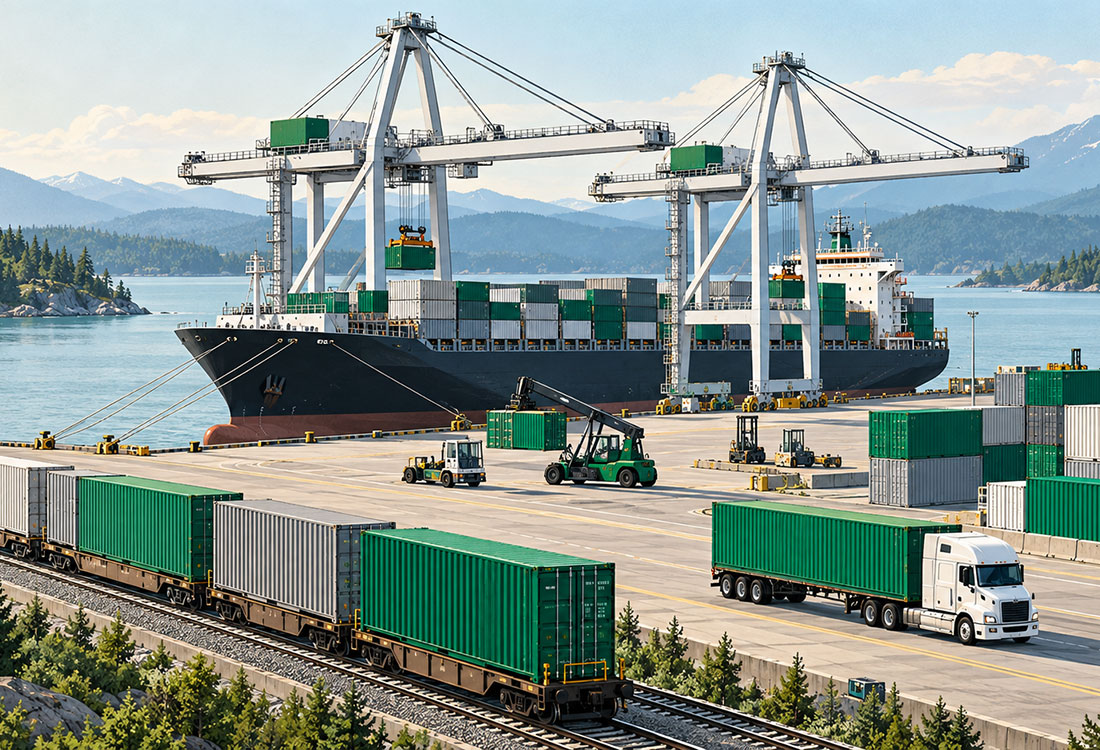
Those figures underline why port capacity is increasingly being viewed as a trade and logistics issue, not simply a marine infrastructure issue. For shippers, carriers, railways, warehouses and freight forwarders, the ability to move goods through reliable port gateways can determine whether a diversification strategy translates into real commercial capacity.
Ports Offer Different Gateways to Global Markets
Canada’s major ports serve different trade patterns, and that geographic range is a core strength. West coast ports connect Canadian exporters and importers to Asian markets. The Port of Montreal is a central hub for trans-Atlantic trade and maintains relatively comparable import and export volumes, an indicator of stable and diversified activity. Halifax provides an Atlantic gateway for containerized goods, bulk commodities and project cargo.
Halifax also has a natural deep-water advantage, with facilities capable of accommodating large container vessels. That capability matters as shipping lines deploy larger ships and look for ports that can support efficient calls, reliable connections and room for cargo growth.
A broader mix of gateways can help supply chains absorb disruption. When capacity is constrained on one coast or in a single international corridor, shippers have more options if alternative ports, inland connections, and distribution networks are ready to support the shift.
Modernization Moves Up the Project List
The federal government is preparing to invest in major port expansions as part of its effort to fast-track nation-building infrastructure projects. Port projects are attracting attention because they connect local infrastructure investment to a broader policy goal: providing Canadian producers and importers with more practical routes to global markets.
The Contrecoeur Container Terminal Project at the Port of Montreal was among the first projects referred to the federal government’s Major Projects Office. The project is expected to expand the port’s container-handling capacity by roughly 60% and generate about $140 million a year in economic benefits once operational. In-water construction began in August 2026.
On the west coast, the Roberts Bank Terminal 2 project would add 2.4 million twenty-foot equivalent units (TEUs) of annual container capacity at Roberts Bank. The federal government has announced $10 billion in support for major infrastructure upgrades to expand capacity at Roberts Bank. The project is part of the broader strategy to improve access to Asian markets and diversify export opportunities.
In Halifax, planning for future terminal capacity reflects the growing importance of Atlantic gateways in a trade network serving Europe, the United Kingdom and other overseas markets.
The Logistics Network Extends Beyond the Dock
Port expansion alone will not deliver the full benefits of trade diversification. Maritime capacity has to connect with dependable rail service, truck capacity, inland terminals, warehouses and border processes. A larger terminal creates value only when cargo can flow to and from it without creating a bottleneck elsewhere in the network.
For trucking companies, growth at Canadian ports can create new opportunities in drayage, regional distribution, transload operations and inland container movements. It can also create new planning demands. Container pickup windows, terminal dwell time, chassis availability and rail handoffs all affect whether additional cargo becomes productive freight or costly delay.
Shippers will need to look beyond a single ocean leg when evaluating port options. Total landed cost, service frequency, inland transit time, storage capacity and the availability of return loads will all shape the economics of using a new gateway. The most resilient routes will be those supported by coordinated marine, rail and truck capacity.
Building Capacity for a More Resilient Trade Strategy
Diversifying trade is not a short-term rerouting exercise. It requires the physical capacity and operating discipline to move more goods through more gateways over time. Canada’s port investments are therefore part of a larger supply-chain strategy: reducing concentration risk, supporting exporters and giving importers more flexibility when global conditions change.
The near-term test will be execution. Major projects need timely approvals, reliable funding and close coordination with the transportation networks that serve them. If expansion plans are delivered alongside stronger inland connections, Canadian ports can help turn trade diversification from a policy goal into a practical advantage for the freight sector.
For the logistics industry, that would mean more than additional terminal capacity. It would create a wider set of routes, markets and service options to support Canadian trade in a more volatile global environment.
For more information, contact David Lychek, Director – Ocean & Air Services.
Global Spotlight Quiz

Name the city that is home to Europe’s largest Brick Church
- The city’s historic shipyard was the birthplace of the Solidarity trade union.
- Has a historical Beer Bell used to announce the opening of pubs in the old days.
- Birthplace of Goldwasser, a 16th-century herbal liqueur containing floating flakes of real 22-karat gold.
- Known for its Neptune Fountain, located in the heart of the Old Town. The story goes that the people of this city had so much money that they would throw golden coins into the fountain thinking it would bring them luck.
- Known as the amber capital of the world, with the Baltic coast supplying the precious fossilized resin.
Answer: Gdansk, Poland

For more information about shipping freight to or from this city, contact Monserrat Vazquez, Manager – Freight Solutions.
Quick Tip
Timing is everything with your international trading partners
Plan communications around your trading partners’ local business hours. From an Eastern Time office, morning is often a useful window for European contacts, while later in the day can work well for North America’s West Coast. Use scheduled messages and clear handover notes for contacts in Asia. Always confirm the local time, working day and public holidays before arranging a call or setting a deadline; daylight-saving changes do not occur on the same dates in every country.

At Your Service
Alice Yan
Freight Pricing
Alice Yan joined Universal’s Head Office Administration team in December 2020. In August 2022, she took the opportunity to join our Ocean Services team at Head Office, expanding her experience into the logistics field. In preparation for her role in Ocean Services, Alice completed the CIFFA Certificate in International Freight Forwarding and CIFFA Ocean Dangerous Goods course.
In November 2025, an opportunity arose within the Freight Pricing team at Head Office and, driven by her strong desire to learn, Alice joined the team. She is a core member, primarily focused on handling ocean and air import shipments from around the world. Alice’s experience in Ocean Services set her up well for her current role in Freight Pricing. Alice continues to expand her knowledge by handling export shipments as well.
Alice is positive, enthusiastic and always willing to assist others.
Alice can be reached by phone (905) 882-4880, ext. 1225 or by email.

Freight Pricing
SMART Logistics
Controlling how freight moves through your supply chain could save you thousands – or more.
Working with us means someone always asks: how can we make this shipment better?
Single-sourced trucking, customs clearance and distribution to expedite your freight shipments between the U.S. and Canada.
Route is produced monthly for the clients of Universal Logistics. Reader comment and story ideas are welcome. Comments of general interest to all Route readers will, with the permission of the writer, be published. Copyright © 2026 Universal Logistics Inc. All rights reserved. Reproduction for any commercial use is strictly prohibited.
Route is produced by Universal Logistics. Editor: Bettina Scharnberg. Email: bscharnberg@universallogistics.ca While every effort has been made to ensure the accuracy of information contained herein, Universal Logistics accepts no responsibility or liability for errors or omissions. Written correspondence should be forwarded to:
Universal Logistics Inc.
125 Commerce Valley Drive West
Suite 750, Thornhill, Ontario L3T 7W4
Tel: 905-882-4880 Fax: 905-882-2250
Attention: Bettina Scharnberg