













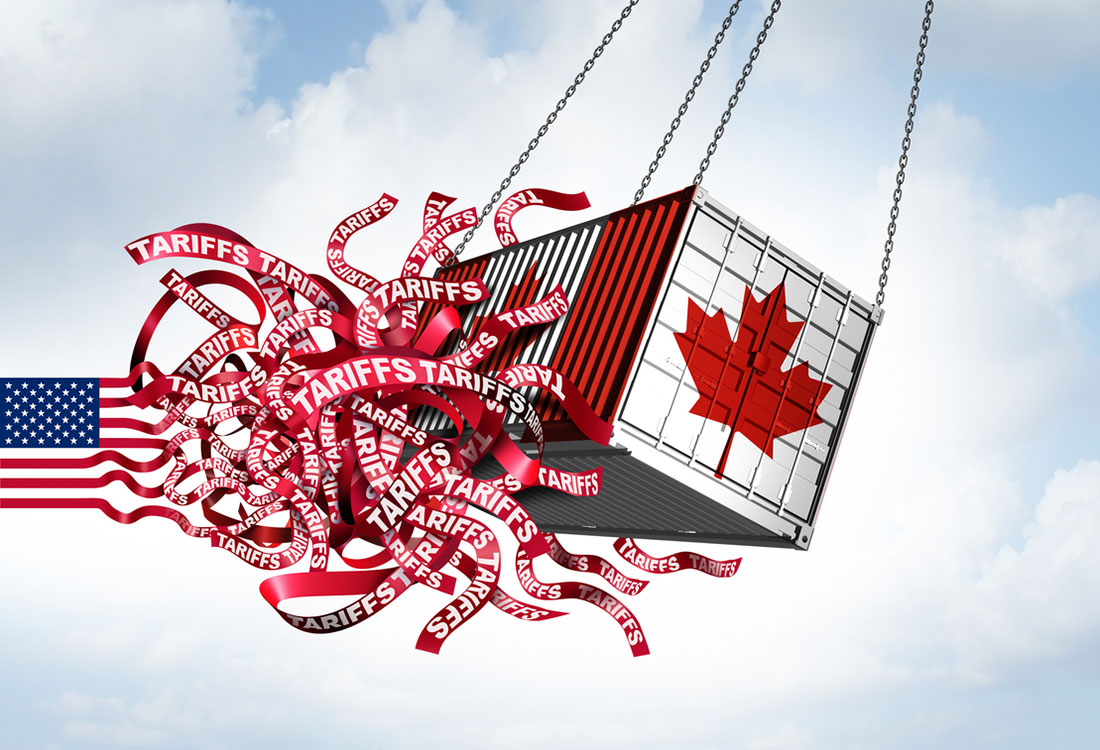
On July 20, 2026, US President Donald Trump signed three proclamations under Section 338 of the Tariff Act of 1930, imposing an additional 50 percent ad valorem duty on certain Canadian-origin goods entering the United States. The duties take effect at 12:01 a.m. Eastern Time on August 19, 2026.
Section 338 allows the President to impose additional duties of up to 50 percent to offset discrimination against US commerce by a foreign country. It has effectively never been used to impose duties before now, and it carries no investigation or consultation requirement, which is why the action moves from signature to effective date in the statutory minimum of 30 days.
The three proclamations
Each proclamation targets a different Canadian trade practice and carries its own product list:
Do not stop at the proclamation titles
This is the point most importers will miss. The product lists extend well beyond dairy, alcohol, and vehicles. Coverage includes wine, cement, plywood, furniture, fishing rods, seeds, clothing, wigs, swimming pools, and hockey equipment, etc.. The motor vehicle annex alone spans most sections of the Harmonized Tariff Schedule.
If your compliance review stopped at the three named sectors, you have not finished the review.
CUSMA/USMCA does not shield covered goods
The White House Fact Sheet confirms the Section 338 duties apply to all covered goods, made in Canada, regardless of whether the good originates under CUSMA/USMCA. This breaks the pattern importers have relied on for the past 18 months, where a valid origin certification generally provided relief under IEEPA and Section 122 measures. A CUSMA/USMCA certificate of origin will not exempt a listed product here.
The 50 percent duty is additional, applying on top of existing duties, taxes, fees, and charges.
What is excluded
Energy, potash, goods already subject to Section 232 duties, and certain other goods including fish, critical minerals or articles, excluding unmanned aircraft, subject to the World Trade Organization Agreement on Trade in Civil Aircraft.
Timing details that matter
- The duty attaches to goods entered for consumption, or withdrawn from warehouse for consumption, on or after 12:01 a.m. ET August 19, 2026. Customs release date governs, not purchase order date or shipping date.
- As published, the proclamations contain no in-transit exception. A shipment that arrives in the U.S. August 18th, but is customs released August 19th pays the duty.
- Warehousing ahead of the date does not preserve current rates, since withdrawal for consumption triggers the duty.
- Covered merchandise admitted to a U.S. foreign trade zone on or after August 19th must be admitted under privileged foreign status, locking in duty treatment at admission. FTZ entry will not avoid the duty.
Canada’s position
Prime Minister Mark Carney has described the action as another unilateral measure in direct violation of CUSMA/USMCA and has stopped short of announcing counter-tariffs, stating Canada is prepared to intensify negotiations. Retaliatory measures on US-origin goods entering Canada remain a live possibility.
What importers should do now
Review the HS classifications for all Canadian-origin goods you ship into the U.S., not just those in the descriptions of the three named sectors, and check them line by line against each Annex to determine which goods will become subject to the 50% duty.
Legal challenges at the US Court of International Trade are widely expected, but Section 338 is an express tariff delegation and importers should not plan around judicial relief arriving before the effective date.
If you are unsure whether your products fall under any of the three Annexes, our US Customs Consulting Services regulatory team can help you work through the classifications. Reach out to Brian Rowe, Director, Customs Compliance & Regulatory Affairs, or your Universal Logistics representative.